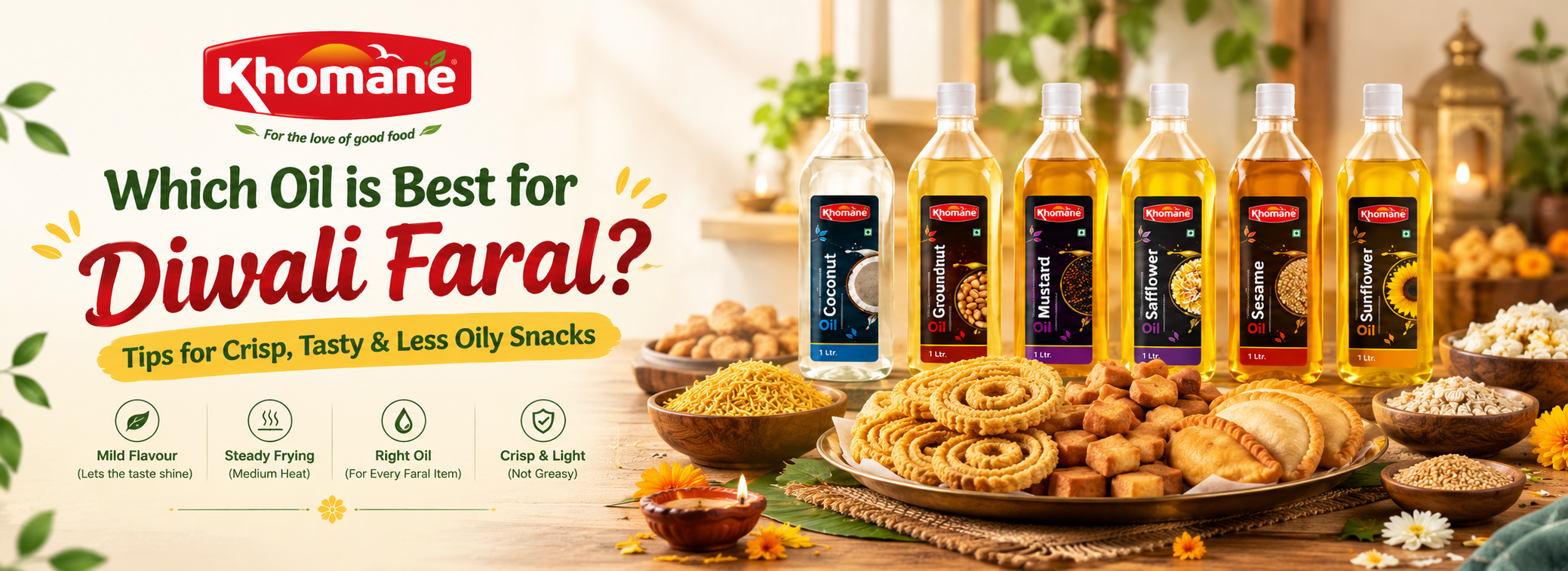
Quick answer: For most Diwali faral, choose a mild-flavoured oil that won’t compete with the spices or sweetness, and keep your frying heat steady. Sunflower, safflower or groundnut oil are common choices. Use ghee only where the recipe calls for it, usually in the dough. Strongly flavoured oils such as mustard or sesame can overpower faral, so save them for other dishes.
If you’re wondering which oil is best for Diwali faral, you’re asking the right question at the right time. Diwali falls on Sunday, 8 November 2026, so frying sessions are about to begin. Faral is the plate of homemade snacks and sweets that many Maharashtrian families prepare in the days before the festival and share with visitors. It usually means hours of frying, so the oil you pick affects taste, crispness and how greasy your snacks feel. kisshthindutone
This guide explains what to look for, which oil suits each faral item, and how to fry well.
What Makes an Oil Good for Faral Frying?
A mild flavour
Chakli, shankarpali and karanji get their taste from flour, spices, jaggery and coconut. A neutral oil lets that taste come through. One recipe notes that a neutral oil works for shankarpali. Another suggests any neutral oil with a high smoke point for chakli. whiskaffairvegrecipesofindia
Steady performance at moderate heat
Most faral frying happens on medium or medium-low heat, which is gentler than deep-frying pakoras. Cold-pressed oils are extracted without high heat, so they keep more of their natural flavour and colour, while refined oils typically have a higher smoke point. If you prefer cold-pressed oil, keep the flame moderate and don’t let the oil smoke. twobrothersindiashop
Freshness and quantity
Faral often means frying several kilos of dough. Start with fresh oil, buy enough in advance, and keep it away from heat and light. Our guide on why cooking oil should be kept away from heat and sunlight explains how.
Which Oil Is Best for Diwali Faral? Oil-by-Oil Guide
| Oil | Flavour | Best for faral | Notes |
| Sunflower | Mild | Chakli, shev, karanji, shankarpali | A good all-round neutral choice |
| Safflower | Mild | Same as above | Also neutral, and a nice alternative to rotate |
| Groundnut | Light, slightly nutty | Chakli, shev, shankarpali | A traditional favourite. One recipe author prefers peanut oil for frying chakli. |
| Ghee | Rich | Dough (moyan), or occasional frying | Changes taste and texture, and costs more |
| Mustard, sesame, coconut | Strong | Not ideal for faral | Their flavours can overpower sweet and mildly spiced snacks shwetainthekitchen |
This is a practical guide, not a rule. Use the oil your family trusts, and rotate oils across the year as part of a balanced approach. See our post on the best cold-pressed oil for Indian cooking for more on matching oil to dish.
Best Oil for Each Faral Item
Chakli
Chakli needs a clean, steady fry so the spirals turn crisp without darkening too fast. Use a mild oil such as sunflower, safflower or groundnut.
Sources differ on heat. One recipe says to fry on medium to medium-low heat, because high heat browns the outside while the inside stays uncooked, and low heat makes chakli hard. Another suggests a medium to medium-high flame at about 180–190°C, measured with a thermometer. The safest approach is to test your oil with a pinch of dough. If the dough rises gradually, the oil is ready, and if it sits at the bottom, the oil is too cold. shwetainthekitchen.com +2
Fry in small batches. Too many pieces at once lower the oil temperature and make chakli soggy. If a chakli absorbs oil or breaks in the pan, your dough may have too much fat. Adding a spoon or two of rice flour and kneading again can help. vegrecipesofindiashwetainthekitchen
Shev (Sev)
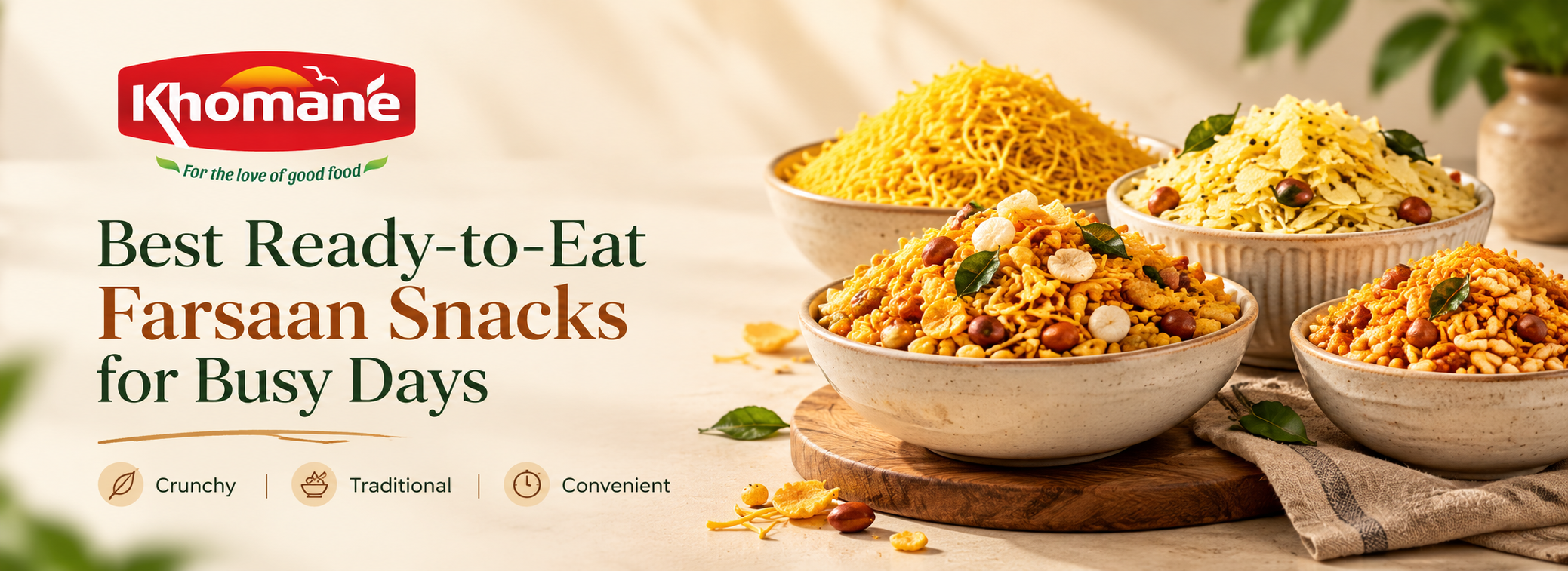
Shev is thin, so it fries quickly and absorbs flavour from the oil. Pick a neutral oil, keep the heat moderate, and press the dough through the shev press in small batches. Remove each batch when the bubbling slows and the strands are pale golden. If you’d rather skip the work, our ready-to-eat farsaan snacks can fill gaps on your faral plate.
Karanji
Karanji is fried to a golden shell around a sweet filling, often coconut and jaggery. The main risk isn’t the oil but leaks. Seal each karanji well and keep the filling dry, or it can leak and splatter. Fry gently on medium-low heat so the pastry cooks through before it browns. A neutral oil keeps the coconut and cardamom notes clear. hindutone
Shankarpali
Shankarpali is where the fat in the dough and the frying oil both matter. Many recipes use ghee in the dough for flakiness, and you can swap in oil, but the taste and texture change. Too much ghee can make shankarpali greasy and even cause it to break while frying. whiskaffairshwetainthekitchen
For frying, medium-low heat in batches is recommended, since high heat browns the outside before the inside is cooked. Frying on very low heat makes it absorb oil and turn greasy. Don’t over-fry, because shankarpali keeps browning from residual heat after you take it out. shankarpali recipe shakarpara +2
Frying Tips for Crisp, Less Oily Faral
- Test the oil every batch. A pinch of dough tells you more than guessing. It should rise steadily, not shoot up instantly or sink.
- Keep batches small. Overcrowding drops the temperature and makes snacks soggy.
- Adjust the heat between batches. Lower it when you remove one batch, then raise it again before the next.
- Drain well. Use a slotted spoon and let snacks rest on paper or a rack.
- Don’t let oil smoke. Smoking means it’s too hot.
For more, read our guide to reducing oil absorption while frying Indian snacks.
Reusing Oil During a Long Faral Session
Faral means many batches, so reuse is tempting. Be cautious. FSSAI has set a limit of 25% Total Polar Compounds, beyond which vegetable oil should not be used. For households, FSSAI guidance suggests filtering oil after frying and using it for curries afterwards. fssaifssai
In practice:
- Strain the oil to remove burnt bits between batches.
- Don’t top up oil that looks dark, smells off, or foams heavily.
- Fry your lighter items first (shankarpali, chakli) and spicier ones later.
See the FSSAI used cooking oil page for official guidance.
Storing Your Faral
Cool everything fully before storing. Use airtight containers in a cool, dry place. One chakli recipe says it keeps for three to four weeks when stored airtight at room temperature. Our post on how long packaged farsan stays fresh after opening has storage habits that apply to homemade faral too. hindutoneshwetainthekitchen
Buying Oil for Diwali: What to Check
With Diwali close, order early so you aren’t scrambling mid-prep. Check the label for the oil type, extraction method, manufacturer details and FSSAI licence number. Our guides on how to identify pure cold-pressed oil and which cold-pressed oil is best for cooking will help you choose with confidence.
Frequently Asked Questions
Which oil is best for Diwali faral?
A mild, neutral oil such as sunflower, safflower or groundnut suits most faral, because it lets the spices and sweetness stand out. Use ghee in the dough where the recipe calls for it.
Can I use cold-pressed oil for frying chakli and shankarpali?
Yes, as long as you keep the heat moderate and avoid smoking. Cold-pressed oils tend to have lower smoke points than refined oils, which suits the medium and medium-low heat most faral needs.
Is ghee better than oil for shankarpali?
Ghee adds flavour and flakiness, mainly in the dough. Oil works for frying and as a substitute, but the taste and texture will change.
Why is my chakli hard or oily?
Hard chakli can mean the oil was too cold or the dough had too little fat. Oily chakli can mean too much fat in the dough or oil that wasn’t hot enough. Test the oil and adjust the dough.
Why did my karanji open while frying?
Usually the edges weren’t sealed well, or the filling was too wet. Seal firmly and keep the filling dry.
How many times can I reuse frying oil?
There’s no fixed count. FSSAI says oil beyond 25% Total Polar Compounds shouldn’t be used, and it advises avoiding repeated reuse. Strain it, use it sparingly, and discard it if it’s dark, smoky or smells off.
How much oil do I need for faral?
It depends on batch sizes and how deep your kadai is. Buy a little more than you think you’ll need, since topping up mid-session is easier than running out.
Stock Up for Diwali with Khomane Agro
Make this Diwali’s faral lighter on stress and full of flavour. Browse Khomane Agro’s cold-pressed oils, including sunflower oil and safflower oil, along with jaggery for karanji fillings, ready-to-eat snacks for your faral plate, and combo packs.
Questions or ready to order? Contact Khomane Agro Farmer Producer Company Limited:
- Shop online: khomaneagro.com/shop
- WhatsApp: 087673 06068
- Email: khomaneagrofpc@gmail.com
- Address: Gat No – 498, Korhale Budruk, Baramati, Maharashtra 412103
Bulk, distributor and export enquiries are also welcome.