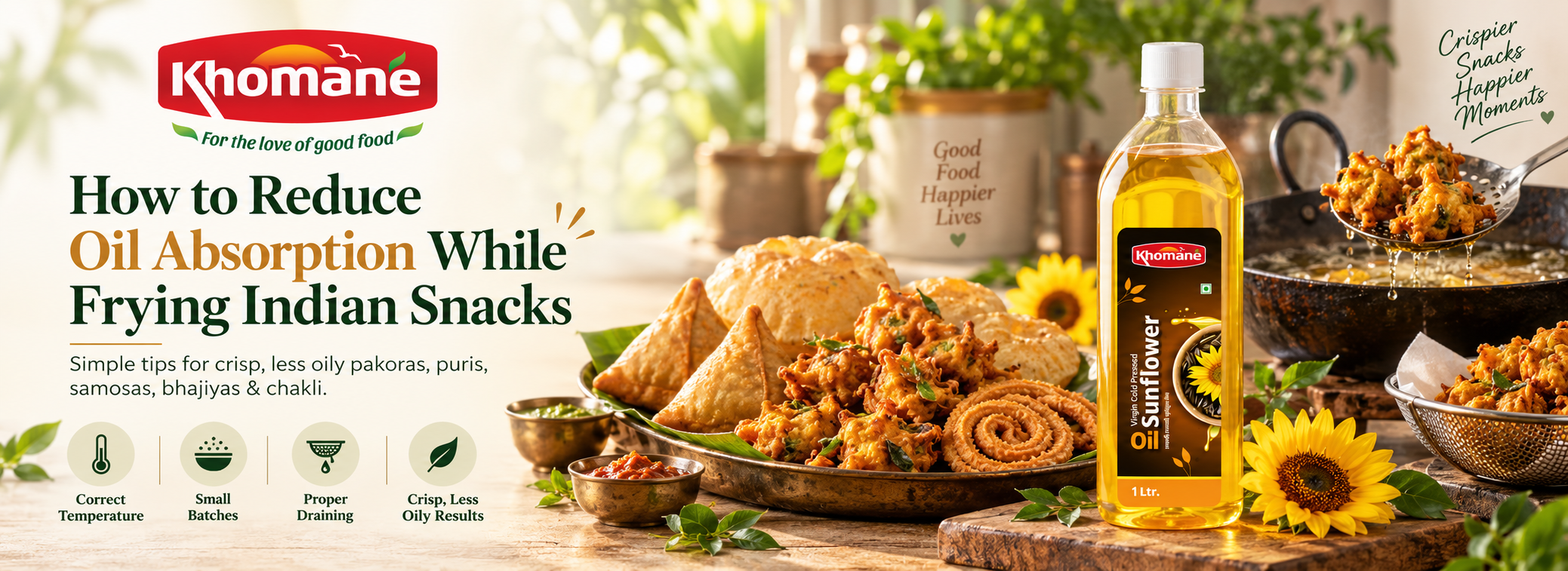
Want to know how to reduce oil absorption while frying Indian snacks? The key is to maintain the correct frying temperature, prepare the batter properly, avoid overcrowding the pan and drain each batch immediately. Whether you are making pakoras, puris, samosas, bhajiyas or chakli, a few simple changes can help you prepare crisp, evenly cooked and less oily Indian snacks.
Oil absorption is influenced by temperature, moisture, frying time, ingredient preparation and batch size. The type of oil matters for flavour and cooking suitability, but good frying technique has the greatest influence on the final texture.
Why Do Indian Snacks Absorb Too Much Oil?
Food can become excessively oily when the frying temperature is too low. Instead of quickly forming a crisp outer layer, the snack remains in the oil longer and may absorb more of it.
Other common reasons include:
- Wet ingredients or watery batter
- Overcrowding the kadai
- Incorrect dough consistency
- Frying for too long
- Adding food before the oil is ready
- Allowing crumbs to accumulate
- Draining snacks incorrectly
Understanding these causes makes it easier to prevent food from absorbing excessive oil.
10 Tips to Reduce Oil Absorption While Frying
1. Heat the Oil to the Correct Temperature
Correct frying temperature is essential. If the oil is not hot enough, snacks cook slowly and may become greasy. If it is excessively hot, the exterior may burn before the inside cooks.
Use a kitchen thermometer when the recipe provides a specific temperature. Otherwise, add a tiny piece of batter or dough. It should rise steadily with bubbles around it—not remain at the bottom or turn dark immediately.
Never allow the oil to smoke.
2. Keep Ingredients as Dry as Possible
Water on vegetables creates spluttering and can affect frying quality. After washing potatoes, chillies, onions or other vegetables, drain and pat them dry before coating or frying.
For pakoras and bhajiyas, avoid adding unnecessary water to the batter. Some vegetables release moisture naturally after salt is added, so assess the consistency before adding more water.
3. Prepare Batter With the Right Consistency
A very thin batter may not coat ingredients properly, while an excessively thick batter can produce a heavy exterior.
For crispy fried snacks, the batter should coat the ingredient evenly without dripping excessively. Follow the recipe measurements and add water gradually rather than all at once.
4. Avoid Overcrowding the Kadai
Adding too many pieces at once lowers the oil temperature. This increases cooking time and can make snacks oily, unevenly cooked or soggy.
Fry in small batches and leave enough space for each piece to cook properly. Allow the oil to return to the required temperature before adding the next batch.
5. Maintain Consistent Heat
Avoid repeatedly switching between very high and very low heat. After adding a batch, the oil temperature naturally drops, so adjust the flame gradually.
Consistent heat helps the exterior cook evenly while preventing unnecessary frying time. The exact heat level will vary depending on the snack, oil quantity and cookware.
6. Do Not Add Baking Soda Excessively
Some Indian snack recipes use a small amount of baking soda to create a lighter texture. However, adding too much may change the taste, colour and structure of the snack.
Use only the quantity specified in a reliable recipe. Do not add extra baking soda with the assumption that it will automatically make the snack crispier or less oily.
7. Use the Right Pan and Enough Oil
A deep, heavy-bottomed kadai helps maintain a more stable frying temperature. A pan that is too shallow or overcrowded may cook food unevenly.
Use enough oil for the snack to move and cook properly, but do not fill the pan excessively. Leave sufficient space at the top to reduce the risk of hot oil spilling or bubbling over.
8. Remove Loose Crumbs Between Batches
Small pieces of batter, flour or coating can break away and remain in the oil. These crumbs may continue to brown or burn, affecting the flavour of later batches.
Use a slotted spoon or suitable strainer to remove loose particles carefully between batches. Do not touch or strain the oil while it is dangerously hot.
9. Remove Snacks as Soon as They Are Cooked
Leaving snacks in the oil longer than necessary can dry the interior, darken the exterior and affect their texture.
Remove the food once it reaches the appropriate colour and is properly cooked inside. Follow a trusted recipe, especially for filled snacks such as samosas and kachoris, which need adequate time for the inner layers to cook.
10. Drain Fried Snacks Immediately
Lift the snack with a slotted spoon and allow excess oil to drip back into the kadai. Then place it briefly on an absorbent food-grade paper or a wire rack.
Do not pile hot snacks into a deep bowl. Trapped steam can soften the exterior and make the snacks feel greasy. Spread them in a single layer whenever possible.
Does the Choice of Cooking Oil Affect Oil Absorption?
Oil absorption depends primarily on preparation, temperature and frying time rather than only on the oil variety. However, the selected oil should be suitable for the recipe and should not be overheated.
Groundnut, mustard, sesame and sunflower oils each provide a different aroma and flavour. Choose an oil that complements the snack and follow the manufacturer’s cooking and storage instructions.
Cold-pressed oils retain the distinctive character of their source ingredients. This makes oil selection particularly important when you want the flavour to become part of the recipe.
Mistakes That Make Fried Snacks Oily
Avoid these common frying mistakes:
- Starting with insufficiently heated oil
- Adding frozen or wet food directly to hot oil
- Making the batter unnecessarily watery
- Frying too many pieces together
- Repeatedly reheating old cooking oil
- Mixing fresh oil into deteriorated used oil
- Allowing the oil to smoke
- Covering fried snacks while they are still hot
FAQs About Reducing Oil Absorption
Why do pakoras absorb too much oil?
Pakoras may become oily when the oil is insufficiently heated, the batter is too thin or too many pieces are fried together.
How can I tell whether the oil is ready for frying?
Use a kitchen thermometer when possible. Alternatively, test with a tiny amount of batter. It should rise steadily and cook without remaining at the bottom or darkening instantly.
Does adding rice flour make snacks less oily?
Rice flour may help produce a crisp texture in certain recipes, but it does not guarantee lower oil absorption. Temperature, batter consistency and frying time remain important.
Should fried snacks be drained on paper or a wire rack?
Both can help. Absorbent food-grade paper removes surface oil, while a wire rack allows oil and steam to escape without making the bottom soggy.
Why do puris become oily?
Puris may absorb more oil when the dough is too soft, the oil is not adequately heated or the puri is fried for too long.
Can used oil be mixed with fresh oil for frying?
It is better not to mix fresh oil with deteriorated used oil. Fresh oil cannot reverse the changes caused by previous heating.
Fry Better With the Right Technique and Oil
Knowing how to reduce oil absorption while frying helps you prepare Indian snacks with a crisp texture and balanced flavour. Keep the ingredients dry, maintain the proper temperature, fry in small batches and drain every batch immediately.
Explore Khomane Agro’s range of traditionally produced cold-pressed oils and choose an oil that complements your favourite Indian recipes.
🌐 Website: www.khomaneagro.com
🛒 Available on: Amazon India
📞 Call/WhatsApp: 8767306068
📧 Email: khomaneagrofpc@gmail.com
Choose Khomane Agro and bring authentic flavour to every batch of your favourite Indian snacks.