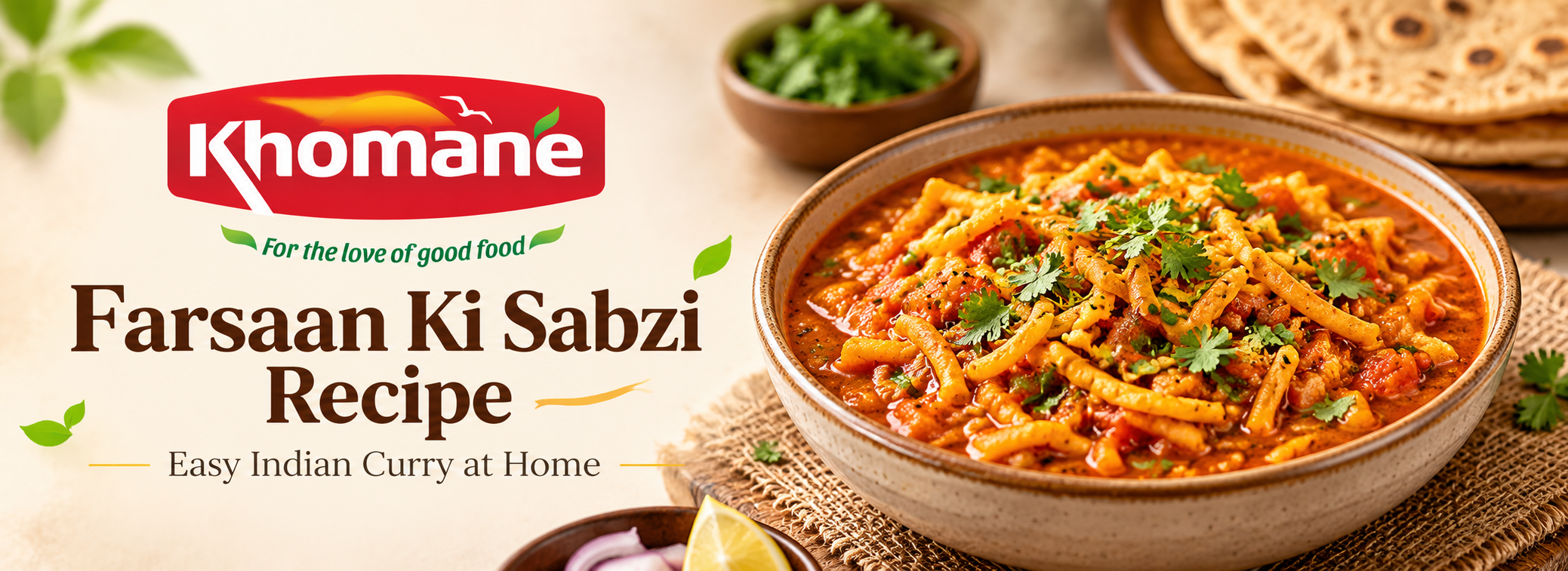
Farsaan ki sabzi is a delicious Indian-style curry made by combining ready-made farsaan or sev with a flavourful onion-tomato gravy and traditional Indian spices. This easy farsaan ki sabzi recipe takes approximately 25 minutes to prepare and offers a convenient way to turn a familiar crunchy snack into a satisfying homemade dish.
Whether you are looking for a quick lunch recipe, a different option for dinner or a creative way to use ready-made farsaan, this recipe can be prepared with ingredients commonly found in Indian kitchens.
The secret to making delicious farsaan curry lies in balancing the spices, preparing the gravy to the right consistency and adding the farsaan at the correct time.
In this guide, you will learn how to make farsaan ki sabzi step by step, which type of farsaan works best, how to prevent it from becoming soggy and how to serve it with your favourite Indian breads.
What Is Farsaan Ki Sabzi?
Farsaan ki sabzi is an Indian curry prepared using savoury farsaan or sev in a spiced tomato-based gravy. The farsaan absorbs the flavours of the masala, creating a combination of tangy, spicy and savoury tastes.
Farsaan is a broad term for traditional Indian savoury snacks, especially popular in Maharashtra and Gujarat. It includes different varieties of sev, mixtures and other crunchy snacks made using ingredients such as gram flour, spices and seasonings.
Although farsaan is commonly enjoyed as a ready-to-eat snack with tea, certain varieties can also be used in Indian cooking.
One well-known related dish is sev tameta nu shaak, a traditional Gujarati preparation made using sev and tomato gravy. While the Gujarati version is commonly made without onion or garlic, other home-style farsaan curries may include onions, garlic and different regional spices.
The final flavour and texture of farsaan ki sabzi depend on the type of farsaan used and the consistency of the gravy.
Farsaan Ki Sabzi Recipe at a Glance
| Recipe Detail | Information |
|---|---|
| Recipe Name | Farsaan Ki Sabzi |
| Cuisine | Indian |
| Course | Main Course / Side Dish |
| Preparation Time | 10 minutes |
| Cooking Time | 15 minutes |
| Total Time | Approximately 25 minutes |
| Servings | 2–3 people |
| Main Ingredient | Ready-made farsaan or thick sev |
| Cooking Method | Stovetop |
| Difficulty Level | Easy |
| Best Served With | Roti, chapati, bhakri or paratha |
This simple farsaan curry recipe is suitable for home cooks who want to prepare something different without spending too much time in the kitchen.
Ingredients Required for Farsaan Ki Sabzi
One of the biggest advantages of this recipe is that it does not require complicated ingredients.
Most of the ingredients are regular kitchen essentials, making it a practical choice for everyday cooking.
Main Ingredients
- 1 cup ready-made farsaan or thick sev
- 1 medium onion, finely chopped
- 2 medium tomatoes, finely chopped
- 1–2 green chillies, finely chopped
- 1 tablespoon cooking oil
- ½ teaspoon cumin seeds
- ¼ teaspoon turmeric powder
- ½–1 teaspoon red chilli powder
- 1 teaspoon coriander powder
- A pinch of asafoetida (hing), optional
- Salt according to taste
- 1–1½ cups water
- Fresh coriander leaves for garnishing
Optional Ingredients for Extra Flavour
Depending on your preferred regional cooking style, you can also include:
- ½ teaspoon ginger-garlic paste
- ¼ teaspoon garam masala
- A pinch of jaggery to balance tomato acidity
- A little lemon juice for additional tanginess
Cooking Tip: Ready-made farsaan often contains salt, chilli and other spices. Always taste the gravy before adding extra seasoning to avoid making the curry too salty or spicy.
How to Make Farsaan Ki Sabzi Step by Step
Making farsaan ki sabzi at home is straightforward. Follow these six steps to prepare a flavourful curry with a balanced consistency.
Step 1: Prepare All the Ingredients
Begin by finely chopping the onion, tomatoes and green chillies.
Measure the turmeric powder, coriander powder and red chilli powder before starting.
Keep one cup of ready-made farsaan or thick sev aside.
Preparing the ingredients in advance makes cooking easier and prevents the masala from burning while you measure the spices.
If you are using a mixed farsaan, check whether it contains large pieces, nuts or strongly flavoured ingredients. These may change the texture and taste of the finished curry.
Step 2: Heat Oil and Prepare the Masala Base
Place a pan over medium heat and add one tablespoon of cooking oil.
Once the oil is warm, add the cumin seeds and allow them to crackle.
Add a pinch of asafoetida if desired.
Next, add the finely chopped onion and sauté until it becomes soft and lightly golden.
Add the chopped green chillies and optional ginger-garlic paste.
Cook for approximately 30–60 seconds, stirring continuously to prevent burning.
This step creates the aromatic foundation of the farsaan curry.
Step 3: Add Tomatoes and Indian Spices
Add the chopped tomatoes to the pan and mix well with the sautéed onions.
Now add:
- Turmeric powder
- Red chilli powder
- Coriander powder
Stir thoroughly and cook over medium-low heat until the tomatoes soften and form a thick masala.
This generally takes around 4–6 minutes, depending on the tomatoes and heat level.
If the mixture becomes too dry, add a small splash of water.
For a slightly sweeter Gujarati-inspired flavour, add a small pinch of jaggery.
The masala should develop a balanced combination of tanginess, heat and aromatic spices before the farsaan is added.
Step 4: Prepare the Farsaan Curry Gravy
Pour approximately one cup of water into the prepared masala.
Stir well to combine the water with the onion-tomato mixture.
Allow the gravy to simmer gently for 3–4 minutes.
Taste the gravy and adjust the salt or chilli powder if needed.
For a thicker curry, use slightly less water. For a lighter, more gravy-based preparation, add water gradually until the desired consistency is achieved.
Remember that farsaan absorbs moisture quickly after being added to hot gravy.
Pro Tip: Keep the gravy slightly thinner than your desired final consistency. This helps prevent the curry from becoming excessively thick after adding the farsaan.
Step 5: Add the Ready-Made Farsaan
Once the gravy is properly cooked, reduce the heat to low.
Add the ready-made farsaan or thick sev and mix gently until it is coated with the masala.
Heat briefly, then switch off the flame.
Avoid cooking the farsaan for too long because prolonged exposure to hot gravy can cause it to lose its texture.
If you prefer a softer curry, allow the farsaan to absorb some gravy for a short time.
For a slightly crunchy texture, add the farsaan immediately before serving.
Step 6: Garnish and Serve Hot
Transfer the prepared farsaan ki sabzi to a serving bowl.
Garnish with freshly chopped coriander leaves.
For additional crunch, sprinkle a small amount of dry farsaan over the curry just before serving.
Serve immediately with freshly prepared roti, chapati, bhakri or paratha.
Your homemade farsaan ki sabzi is ready to enjoy!
Which Type of Farsaan Is Best for Making Sabzi?
Choosing the right farsaan is important because different varieties respond differently when added to gravy.
Some varieties soften quickly, while others retain their texture for slightly longer.
Here is a simple comparison:
| Type of Farsaan | Texture in Curry | Recommended Use |
|---|---|---|
| Thick Sev | Softens gradually | Suitable for everyday farsaan sabzi |
| Fine Sev | Softens very quickly | Best added just before serving |
| Mixed Farsaan | Creates varied textures | Suitable for experimental home-style curries |
| Spicy Farsaan | Adds stronger seasoning | Use with carefully balanced gravy |
| Mild Farsaan | Allows gravy flavours to stand out | Suitable for mild or medium-spiced curry |
If you are preparing farsaan ki sabzi for the first time, thick sev is a practical choice because it is easier to manage during cooking.
A suitable ready-made farsaan mixture can also work, but its ingredients and seasoning should complement the tomato gravy.
Tips to Make the Best Farsaan Ki Sabzi at Home
A few simple cooking techniques can make a noticeable difference to the flavour and texture of this dish.
1. Add Farsaan at the Right Time
The most common mistake is adding farsaan too early.
When farsaan remains in hot gravy for too long, it absorbs excessive moisture and can become mushy.
For better texture, add farsaan near the end of cooking.
2. Use Fresh Tomatoes for Balanced Flavour
Tomatoes contribute tanginess and help create the base of the curry.
Use ripe tomatoes for a balanced flavour.
If your tomatoes taste very acidic, a small pinch of jaggery can help balance the gravy.
3. Avoid Excess Salt
Packaged farsaan may already contain salt and spices.
Adding the normal amount of salt used in vegetable curries can make the finished dish too salty.
Taste the gravy first and adjust carefully after considering the farsaan seasoning.
4. Control the Gravy Consistency
Farsaan absorbs water as it softens.
If the curry becomes too thick, add a little hot water and mix gently.
Avoid repeatedly boiling the farsaan to correct the consistency.
5. Select the Right Farsaan Variety
Every farsaan mixture has a different flavour profile.
Some contain sev, while others may include pulses, peanuts, fried ingredients or additional spices.
For a more traditional preparation, use thick sev.
For a creative mixed-farsaan curry, choose a mixture that complements the tomato masala.
6. Serve Immediately for Better Texture
Farsaan ki sabzi generally tastes best when freshly prepared.
If the curry sits for too long, the farsaan continues absorbing moisture.
When preparing food in advance, keep the gravy and farsaan separate and combine them before serving.
Popular Variations of Farsaan Ki Sabzi
The basic farsaan curry recipe can be adapted according to regional tastes and available ingredients.
Gujarati-Style Sev Tameta Nu Shaak
Sev tameta nu shaak is a popular Gujarati dish prepared with sev and tomato-based gravy.
It commonly features a balance of tangy, sweet and spicy flavours.
Traditional versions often avoid onions and garlic and may include a little jaggery.
The sev is generally added towards the end to preserve its texture.
Maharashtrian-Style Farsaan Curry
A home-style Maharashtrian-inspired variation can be prepared using onion, tomato, cumin, coriander powder and regional spice blends.
Depending on personal preference, a little goda masala or another familiar Maharashtrian masala can be included.
Serve this variation with bhakri or chapati.
This is an adaptation rather than a single standard traditional recipe.
Spicy Farsaan Ki Sabzi
For those who enjoy stronger flavours, increase the amount of green chilli or red chilli powder.
However, always check the seasoning in the ready-made farsaan before increasing the spices.
Onion-Free Farsaan Ki Sabzi
If you prefer cooking without onions, prepare the gravy using tomatoes, cumin, turmeric, coriander powder and other suitable spices.
This variation can be a convenient option when you want a simpler tomato-based curry.
What to Serve with Farsaan Ki Sabzi
Farsaan ki sabzi pairs well with several traditional Indian accompaniments.
Roti or chapati: Soft homemade chapatis complement the spicy and tangy gravy, making this a convenient everyday meal.
Bhakri: Jowar or bajra bhakri can be paired with a thicker farsaan curry for a Maharashtrian-inspired meal.
Paratha: Plain paratha works especially well with a rich, flavourful gravy.
Steamed rice: A thinner farsaan curry can be served alongside a small portion of plain rice.
Onion and lemon: Fresh onion slices and lemon wedges can provide a refreshing contrast to the spices.
For a simple lunch or dinner, combine farsaan ki sabzi with chapati and a fresh vegetable salad.
Can You Make Farsaan Ki Sabzi with Ready-Made Farsaan?
Yes, you can make farsaan ki sabzi using a suitable ready-made farsaan mixture. The main requirement is selecting a variety that blends well with the curry gravy.
Ready-made farsaan eliminates the need to prepare sev or other savoury ingredients from scratch.
This can be particularly convenient when you want to prepare an Indian-style curry using ingredients already available at home.
However, not every farsaan mixture produces the same results.
Before cooking, consider the following factors:
- Seasoning: Choose a farsaan whose spice level matches your preferred curry.
- Texture: Thicker snack pieces generally retain their structure longer than fine sev.
- Ingredients: Check whether the mixture contains nuts, pulses or other ingredients that may influence the gravy.
- Freshness: Use farsaan that has been stored correctly and remains within its best-before date.
By selecting the right variety, ready-made farsaan can become an interesting ingredient for homemade Indian curries.
Creative Ways to Use Ready-Made Farsaan in Indian Cooking
Ready-made farsaan is not limited to evening snacking.
Depending on the variety, it can also be incorporated into several familiar Indian dishes.
Farsaan Topping for Poha
A small amount of crunchy farsaan can add texture to freshly prepared poha.
Sprinkle it just before serving to preserve the crunch.
Homemade Bhel Puri
Combine suitable farsaan with puffed rice, onion, tomato, coriander and chutneys to prepare a quick bhel-style snack.
Farsaan Chaat
Use farsaan as a crunchy topping over boiled potatoes, chopped vegetables and chutneys.
Add the farsaan at the end so it does not become soggy.
Farsaan with Sprouts
A small serving of farsaan can add crunch and seasoning to a sprouts-based snack.
Farsaan Curry
Use suitable farsaan in a tomato-based gravy to create a savoury curry that can be enjoyed with Indian breads.
These preparations show how a familiar Indian snack can be used in different ways beyond traditional tea-time serving.
Explore Khomane Agro Farsaan for Everyday Snacking and Recipes
When choosing ready-made farsaan, flavour, texture and seasoning can influence how well it works in different recipes.
Khomane Agro offers a selection of traditional Indian savoury snacks, including Navratna Farsaan, Classic Mix Farsaan and Special Farsaan.
Khomane Agro Navratna Farsaan
Khomane Agro Navratna Farsaan is a ready-to-eat savoury snack mixture offering a combination of crunchy ingredients and spices.
It can be enjoyed during tea breaks, family gatherings and festive occasions.
For creative recipes such as farsaan ki sabzi, you can experiment with a suitable quantity after checking its ingredients and seasoning.
Since mixed farsaan contains different components, its texture in curry may differ from a traditional sev-based preparation.
Khomane Agro Classic Mix Farsaan
Classic Mix Farsaan offers another option for people who enjoy traditional savoury snack mixtures.
It can be served as an everyday snack or explored as a topping for suitable chaat preparations.
Khomane Agro Special Farsaan
Special Farsaan is another savoury snack option for people who prefer a richer mixed-farsaan experience.
When using any mixed farsaan in cooking, start with a small quantity to understand how its flavour and texture respond to hot gravy.
Explore the range: Shop Khomane Agro Farsaan
Common Mistakes to Avoid When Making Farsaan Curry
Even a simple recipe can produce different results depending on cooking technique.
Avoid these common mistakes for better consistency and flavour.
Adding too much water: Excess water may produce a thin gravy that does not coat the farsaan properly. Add water gradually and adjust as necessary.
Cooking farsaan for too long: Extended cooking can cause the farsaan to lose its structure. Add it near the end.
Using too many spices: Ready-made farsaan is already seasoned. Too many additional spices can overpower the dish.
Preparing the dish too far in advance: Farsaan absorbs moisture as it rests, causing the texture to change.
Using strongly flavoured mixtures without checking: Some farsaan varieties contain ingredients that may not complement a tomato-based curry.
For more consistent results, taste and adjust the gravy before adding the farsaan.
How to Store and Reheat Farsaan Ki Sabzi
Farsaan ki sabzi is best served fresh, but the gravy can be prepared ahead of time.
If you plan to make the dish in advance, prepare the tomato-onion gravy and allow it to cool safely before refrigerating it in an airtight container.
For best quality, use the refrigerated gravy within 1–2 days.
When ready to serve:
- Reheat the gravy thoroughly until piping hot.
- Add a little water if the consistency has become thick.
- Adjust the seasoning if necessary.
- Switch off the heat or reduce it to low.
- Add the farsaan just before serving.
If the farsaan has already been mixed into the gravy, it will generally become softer during storage.
Avoid leaving prepared curry at room temperature for extended periods.
Frequently Asked Questions About Farsaan Ki Sabzi
1. How do you make farsaan ki sabzi at home?
To make farsaan ki sabzi, prepare a gravy using onion, tomatoes, cumin, turmeric, coriander powder and chilli powder. Add water and simmer until the flavours combine. Finally, add ready-made farsaan or thick sev, mix gently and serve immediately with roti or chapati.
2. Can I use ready-made farsaan to make sabzi?
Yes. A suitable ready-made farsaan mixture can be used to prepare farsaan ki sabzi. Choose a variety with a flavour and texture that complements the curry. Thick sev is often easier to use for a traditional sev-based preparation.
3. Is farsaan ki sabzi the same as sev tameta nu shaak?
They are related but not necessarily identical. Sev tameta nu shaak is a Gujarati tomato-based preparation made with sev, while farsaan ki sabzi can refer to home-style variations using different savoury farsaan mixtures and spices.
4. How long does it take to prepare farsaan ki sabzi?
This easy farsaan ki sabzi recipe takes approximately 25 minutes, including 10 minutes of preparation and 15 minutes of cooking. The exact time may vary depending on the ingredients and cooking method.
5. How can I prevent farsaan from becoming soggy?
Add the farsaan immediately before serving and avoid prolonged cooking after adding it to the gravy. You can also reserve some dry farsaan for garnishing to maintain a crunchy texture.
6. Which type of farsaan is best for making sabzi?
Thick sev is a practical choice because it generally maintains its texture longer than fine sev. Suitable mixed farsaan varieties can also be used, but their flavour and ingredients may change the final dish.
7. Can farsaan ki sabzi be prepared without onion and garlic?
Yes. An onion-free and garlic-free version can be prepared using tomatoes, cumin, turmeric, coriander powder and other suitable spices. This is similar in approach to certain Gujarati-style sev tomato curries.
8. Can I prepare farsaan curry in advance?
You can prepare the gravy in advance and store it properly in the refrigerator. Reheat the gravy thoroughly and add the farsaan just before serving to maintain a better texture.
9. What can I serve with farsaan ki sabzi?
Farsaan ki sabzi can be served with roti, chapati, bhakri, paratha or rice. The ideal accompaniment depends on the thickness and seasoning of your curry.
10. Where can I buy Khomane Agro farsaan online?
You can explore Khomane Agro’s ready-made farsaan range directly at khomaneagro.com. Product selections and availability may vary.
Conclusion: Try This Easy Farsaan Ki Sabzi Recipe at Home
Farsaan ki sabzi is a simple and flavourful way to transform a traditional Indian savoury snack into a homemade curry.
With tomatoes, onions, everyday Indian spices and a suitable variety of ready-made farsaan, you can prepare this dish in approximately 25 minutes.
Whether you prefer a Gujarati-inspired sev curry or a spicier home-style variation, the secret is to prepare a balanced gravy and add the farsaan towards the end of cooking.
For an easy lunch or dinner, serve your freshly prepared farsaan curry with warm chapati, roti or bhakri.
Looking for ready-made farsaan for everyday snacking and creative Indian recipes?
Explore Khomane Agro’s savoury snack selection and discover different farsaan varieties to enjoy with your family.
Shop Online: https://khomaneagro.com/
Explore Farsaan Products: https://khomaneagro.com/product-category/snacks/farsan/
Call Us: +91 8767306068