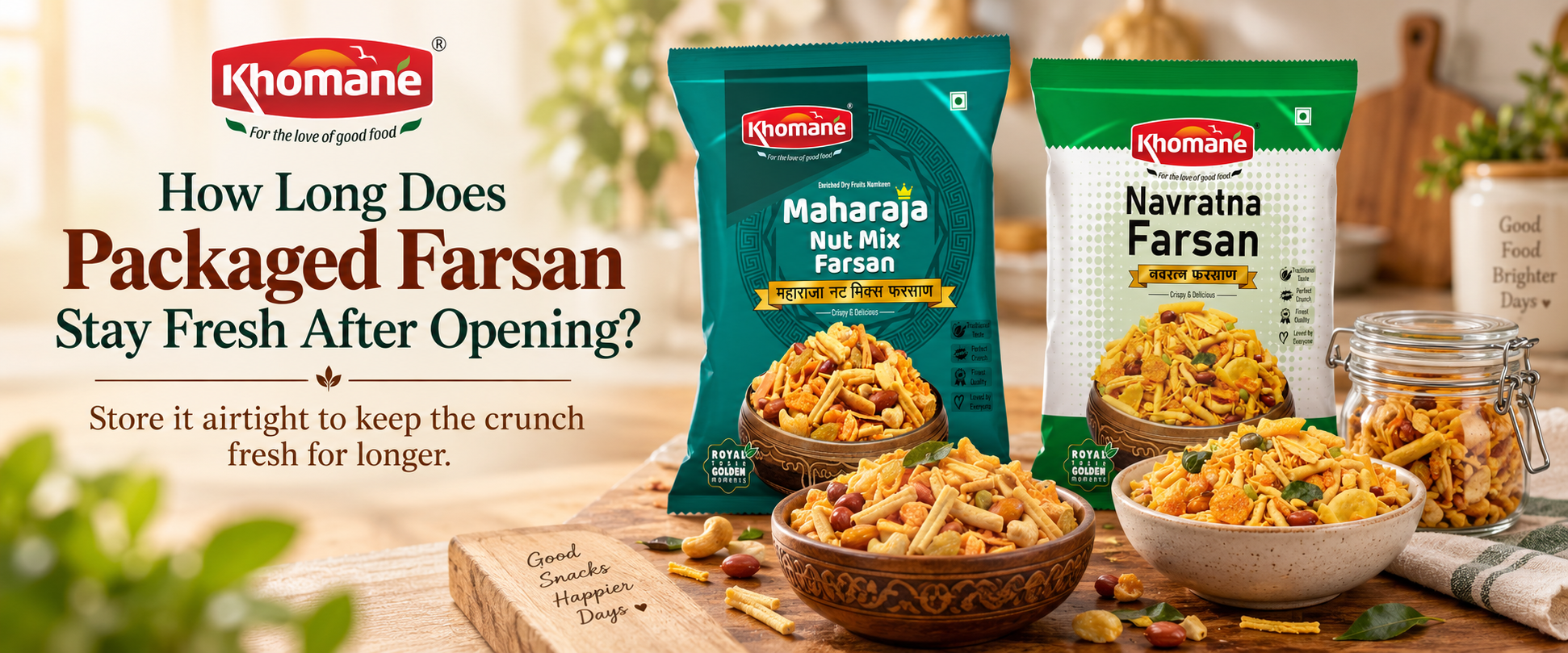
How long does packaged farsan stay fresh after opening? In most cases, properly stored farsan can maintain good taste and crunch for several days and sometimes up to one or two weeks. However, the exact duration depends on its ingredients, oil content, packaging, humidity and storage conditions. Always follow the instructions on the pack and consume the farsan as soon as possible after opening.
Once a packet is opened, exposure to air and moisture begins affecting its crispness, aroma and flavour. Proper storage can help slow this process.
What Is the Shelf Life of Packaged Farsan After Opening?
There is no single shelf life that applies to every type of farsan. Dry products such as chiwda, bhadang, sev and certain mixtures may retain their quality longer than farsan containing moist ingredients.
As a practical guideline:
- Properly sealed dry farsan: Often stays crisp for several days
- Farsan stored in humid conditions: May become soft within a few hours or days
- Farsan containing peanuts or high-fat ingredients: May develop a stale or rancid flavour sooner if exposed to heat
- Fresh or moist farsan: Usually has a much shorter storage period and may require refrigeration
The manufacturer’s storage instructions and after-opening guidance should always take priority over a general estimate.
What Affects Packaged Farsan Freshness?
Exposure to Air
After opening, oxygen enters the packet and gradually affects the oil and spices present in the farsan. Prolonged exposure can lead to a stale smell and changes in flavour.
Moisture and Humidity
Moisture is one of the main reasons farsan loses its crunch. During humid or monsoon weather, opened farsan can quickly absorb moisture from the surrounding air and become soft.
Temperature
Heat can speed up changes in cooking oil and reduce freshness. Keeping farsan near a stove, oven, sunny window or other warm area may shorten its usable period.
Ingredients
Different farsan varieties have different storage characteristics. Products containing peanuts, coconut, fried lentils or strong masalas may change in flavour at different rates.
Handling
Using wet hands or a damp spoon can introduce moisture and contamination. Always handle farsan with clean, dry hands or utensils.
How to Store Farsan After Opening
Transfer It to an Airtight Container
The best way to store farsan after opening is to place it in a clean, dry and airtight food-grade container. Close the lid immediately after serving.
If you keep the farsan in its original packet, remove excess air and seal the opening tightly with a strong clip.
Store It in a Cool and Dry Place
Keep the container inside a dry kitchen cabinet, away from sunlight, heat and moisture. Avoid storing it near the cooking area, sink or refrigerator door.
Use Only Dry Utensils
Never use a wet spoon to remove farsan from the container. Even a small amount of moisture can reduce its crispness and encourage spoilage.
Avoid Mixing Old and New Farsan
Do not add a newly opened packet to a container holding older farsan. Mixing batches can transfer stale flavours and makes it difficult to track freshness.
Open Smaller Packs When Possible
If farsan is not consumed frequently in your household, smaller packs can be more practical. They reduce repeated exposure to air and help maintain freshness.
How to Keep Packaged Farsan Crispy
To keep packaged farsan crispy, take out only the quantity required and reseal the packet or container immediately. Do not leave the entire container open while eating.
During the monsoon, divide a large packet into two or three smaller airtight containers. This limits the amount of farsan exposed each time one container is opened.
Avoid keeping farsan in thin, loosely tied plastic bags. These may not provide enough protection against air and humidity.
Best-Before Date vs Freshness After Opening
The best-before date generally indicates how long an unopened product is expected to retain its intended quality when stored as directed. Opening the packet changes the storage conditions because the product becomes exposed to air, humidity and handling.
Therefore, farsan may lose its crunch or flavour before the printed best-before date once the package has been opened. Look for specific instructions such as “consume immediately after opening” or “store in an airtight container.”
Signs That Packaged Farsan Is No Longer Fresh
Loss of Crunch
Softness is usually a quality issue caused by absorbed moisture. However, it should be considered together with smell, taste and storage history.
Stale or Rancid Smell
Discard farsan if it smells like old oil, paint, chemicals or has any other unpleasant odour.
Unusual Taste
A bitter, sour or noticeably stale taste may indicate that the oil or ingredients have deteriorated. Stop eating it immediately.
Visible Mould or Moisture
Do not consume farsan if you notice mould, moisture droplets, unusual discolouration or insects inside the pack.
Damaged Packaging
Avoid consuming the product if the package was torn, leaking, improperly sealed or damaged before opening.
Can Opened Farsan Be Refrigerated?
Most dry farsan does not need refrigeration unless the label specifically recommends it. Refrigerators can contain moisture, and frequent opening may cause condensation inside an improperly sealed container.
If refrigeration is necessary, use a completely airtight container and allow it to reach room temperature before opening. This can reduce condensation on the farsan.
FAQs About Packaged Farsan Freshness
How many days can farsan be stored after opening?
It depends on the ingredients and storage conditions. Dry farsan may retain its quality for several days when stored airtight, but the pack instructions should be followed.
Can I eat farsan that has become soft?
Softness alone may result from humidity, but check for an unusual smell, taste, mould or moisture. When in doubt, discard it.
Which container is best for storing farsan?
Use a clean, dry, food-grade container with a tight-fitting lid.
Why does farsan become soggy during the monsoon?
Farsan absorbs moisture from humid air, causing it to lose its crisp texture.
Can stale farsan be made crispy again?
Heating may temporarily improve texture, but it cannot make spoiled or rancid farsan safe. Discard farsan with an unusual smell or taste.
Should different farsan varieties be stored together?
No. Store each variety separately to preserve its individual aroma, flavour and texture.
Enjoy Fresh and Flavourful Farsan from Khomane Agro
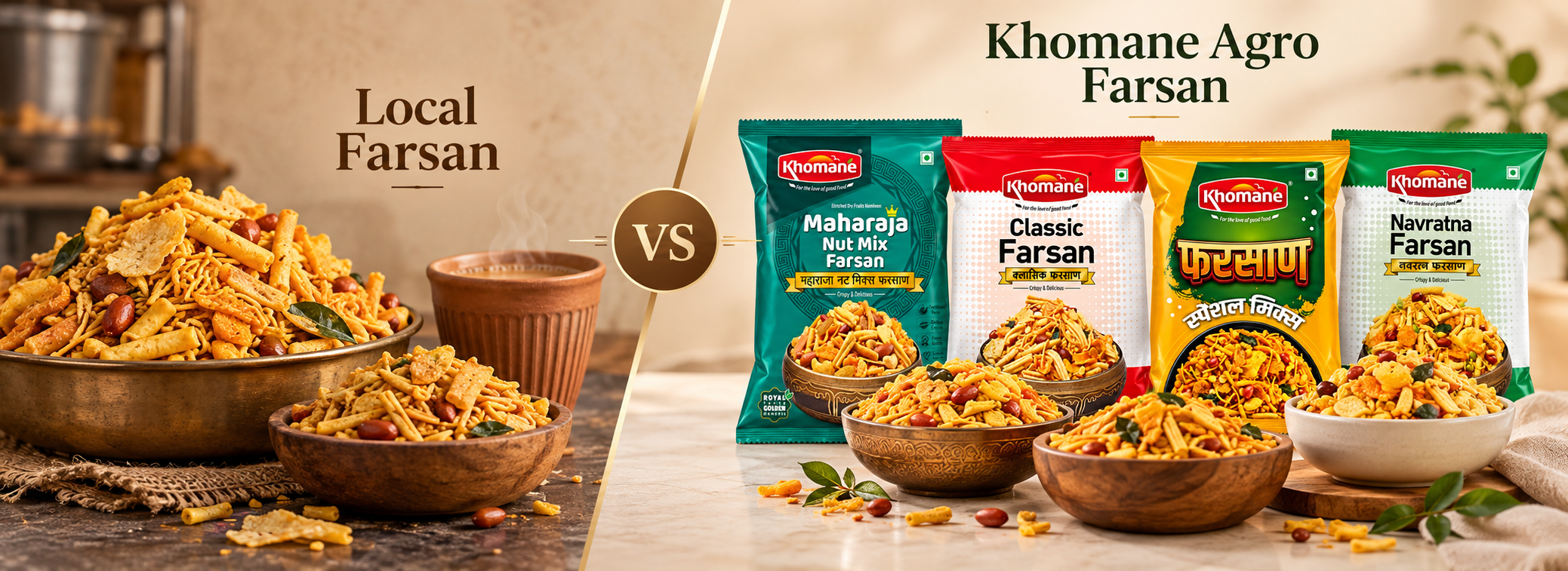
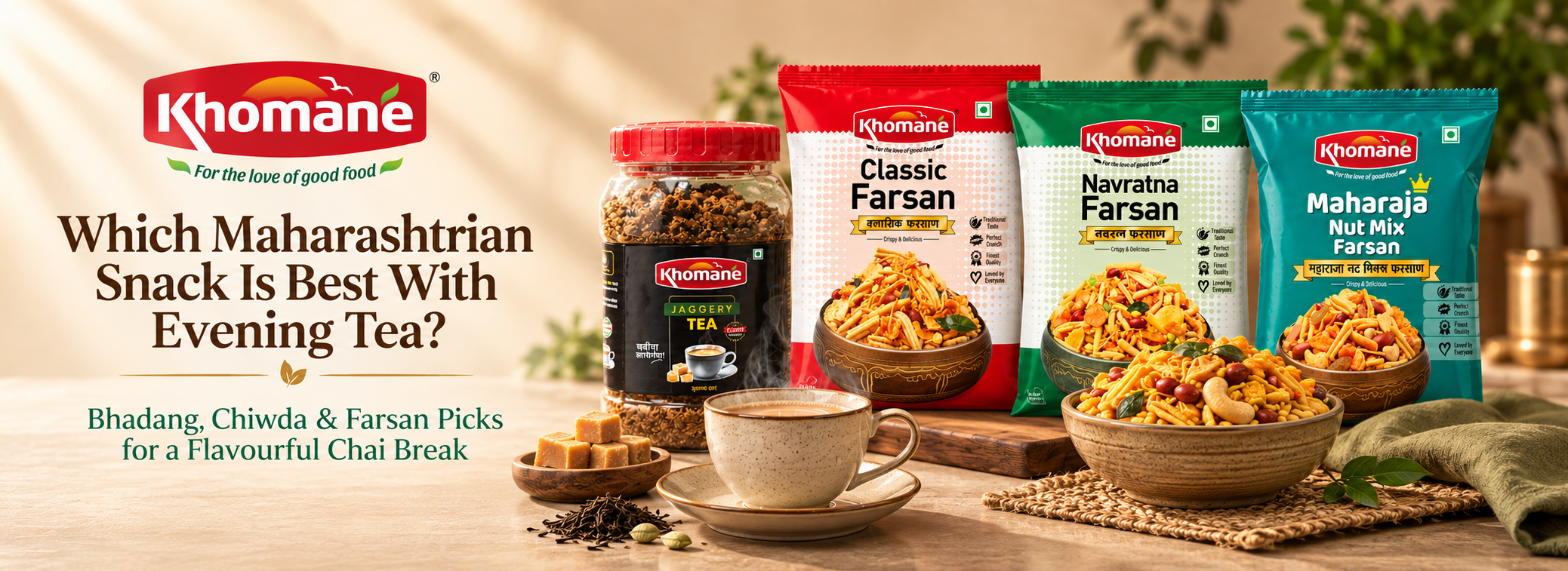
Enjoy your favourite Classic Mix, Navaratna Mix, Special Mix, Lasun Chiwda and Bhadang Bhel from Khomane Agro Farmer Producer Co. Ltd. Store every pack correctly after opening to preserve its signature crunch and flavour.
📧 khomaneagrofpc@gmail.com
🌐 www.khomaneagro.com
Explore Khomane Agro’s farsan and traditional snack range and make every tea break deliciously crunchy.