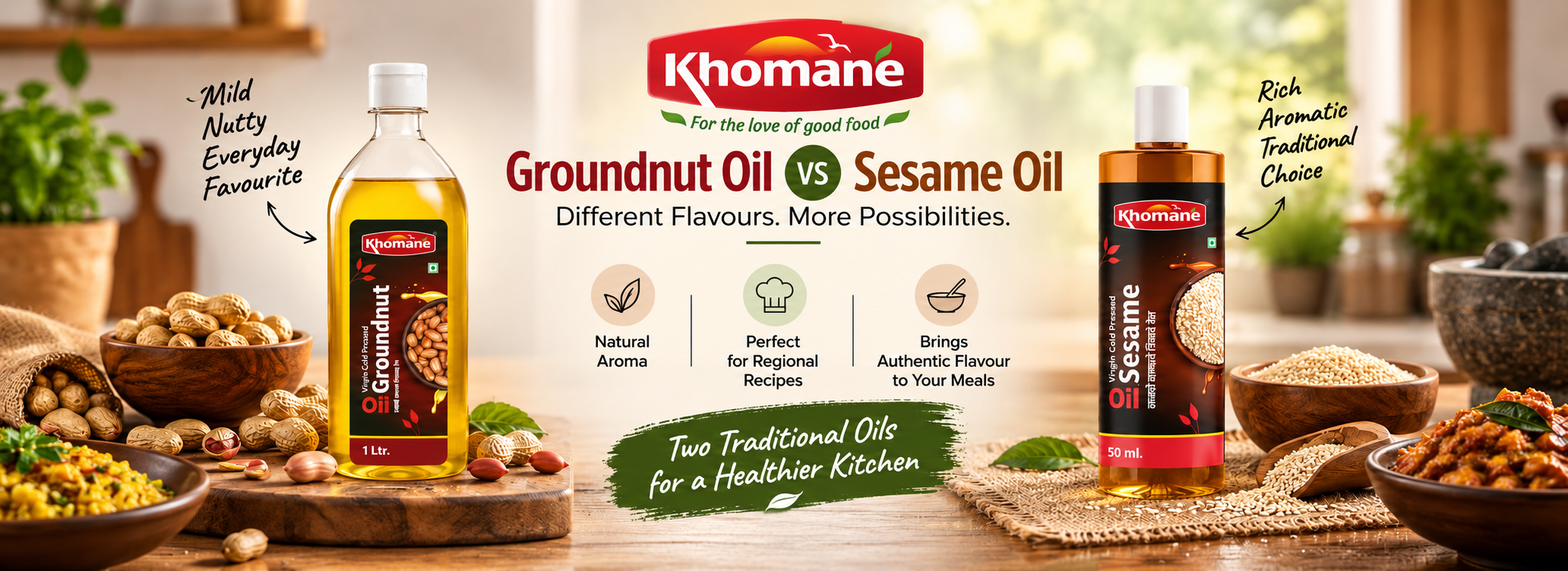
When comparing groundnut oil vs sesame oil, the main differences are their taste, aroma and role in regional cooking. Groundnut oil has a familiar nutty flavour that blends easily with many everyday dishes. Sesame oil has a deeper, more distinctive aroma that can become an important part of the recipe itself.
Neither oil is universally better. The right choice depends on what you are cooking and how strongly you want the oil’s flavour to appear. This guide compares cold-pressed groundnut oil and cold-pressed sesame oil to help you choose confidently.
What Is Groundnut Oil?
Groundnut oil is extracted from groundnuts, commonly known as peanuts. Cold-pressed groundnut oil is produced mechanically without the intensive refining associated with refined oil.
Its balanced nutty flavour makes it a familiar choice in many Maharashtrian, Gujarati and other Indian kitchens. It can complement spices without dominating the final dish.
What Does Groundnut Oil Taste and Smell Like?
The groundnut oil taste is generally:
- Mildly nutty
- Warm and familiar
- Balanced rather than overpowering
- Suitable for savoury Indian recipes
Cold-pressed groundnut oil may have a more noticeable aroma than refined groundnut oil. Natural variations in the seeds and production batch may also cause small differences in colour or fragrance.
What Is Sesame Oil?
Sesame oil is extracted from sesame seeds, also known as til. Its colour, flavour and aroma can vary depending on the type of sesame seeds and how they are processed.
Cold-pressed sesame oil has a distinctive aroma and is widely associated with South Indian cooking, traditional pickles and certain chutneys.
What Does Sesame Oil Taste and Smell Like?
The sesame oil taste is typically:
- Rich and nutty
- More pronounced than groundnut oil
- Slightly earthy
- Distinctive in strongly flavoured recipes
Do not confuse regular cold-pressed sesame oil with toasted sesame oil. Toasted sesame oil has a darker colour and much stronger flavour and is often used in smaller quantities as a finishing oil. Always read the product label before use.
Groundnut Oil vs Sesame Oil: Key Differences
| Feature | Groundnut Oil | Sesame Oil |
| Main ingredient | Groundnuts or peanuts | Sesame seeds |
| Flavour | Mild to moderately nutty | Rich, earthy and distinctive |
| Aroma | Balanced and familiar | More pronounced |
| Regional association | Maharashtra, Gujarat and everyday Indian cooking | South Indian and traditional regional cooking |
| Suitable for | Sabzi, poha, curries, frying and snacks | Pickles, chutneys, curries and regional recipes |
| Effect on food | Blends with other flavours | Adds its own recognisable character |
| Allergy concern | Peanut or groundnut allergen | Sesame allergen |
Best Cooking Uses for Groundnut Oil
Groundnut oil is a versatile option when you want an oil that supports the recipe’s flavours without becoming too dominant.
Groundnut Oil for Everyday Indian Cooking
Cold-pressed groundnut oil can be considered for:
- Daily sabzi and curries
- Poha and upma
- Dal tempering
- Parathas and thepla
- Maharashtrian recipes
- Gujarati recipes
- Homemade snacks
- Chutneys and spice mixtures
Is Groundnut Oil Suitable for Frying?
Groundnut oil is commonly used for frying puris, pakoras, bhajiyas and other Indian snacks. However, frying suitability depends on the particular oil, temperature and manufacturer’s instructions.
Never allow oil to smoke, and avoid reheating the same frying oil repeatedly. Maintaining the correct temperature is more important than simply choosing an oil based on its name.
Best Cooking Uses for Sesame Oil
Sesame oil is suitable when its characteristic aroma is intended to become part of the dish.
Sesame Oil for Regional Recipes
Cold-pressed sesame oil works well in:
- South Indian curries
- Tamarind-based gravies
- Puliyogare or tamarind rice
- Spice pastes
- Dry chutneys
- Vegetable preparations
- Traditional festive dishes
- Certain marinades
Its distinctive flavour pairs well with mustard seeds, curry leaves, tamarind, red chilli, garlic and asafoetida.
Why Is Sesame Oil Used for Pickles?
Sesame oil is traditionally used in many South Indian pickles because its deep flavour complements chilli, tamarind, mustard and other strong ingredients.
It is commonly paired with:
- Mango pickle
- Lemon pickle
- Garlic pickle
- Tomato pickle
- Gongura pickle
- Tamarind-based pickle
Always follow a reliable pickle recipe. Oil alone does not make homemade pickles shelf-stable; ingredient preparation, salt, acidity, hygiene and storage are also important.
Groundnut Oil vs Sesame Oil for Indian Cooking
Choose Groundnut Oil When:
- You want a balanced oil for everyday meals.
- You prefer a milder nutty aroma.
- You cook Maharashtrian or Gujarati dishes regularly.
- You do not want the oil to overpower the masala.
- You need a versatile oil for several cooking methods.
Choose Sesame Oil When:
- You enjoy a deeper and more noticeable aroma.
- You regularly prepare South Indian dishes.
- You want a traditional oil for specific pickle recipes.
- You cook with tamarind, curry leaves and strong spices.
- You want the oil’s flavour to remain noticeable.
Can You Keep Both Oils in the Kitchen?
Yes. Many households select oil according to the recipe instead of expecting one oil to suit every dish.
You could use:
- Groundnut oil for everyday sabzi, poha, curries and snacks.
- Sesame oil for pickles, chutneys and regional preparations.
Buy pack sizes that match your household consumption. Store both oils in tightly closed containers away from heat, sunlight and moisture.
Important Allergy Information
Groundnuts and sesame are recognised food allergens. People with a diagnosed allergy should avoid the relevant oil unless a qualified healthcare professional specifically advises otherwise.
Always check the product label for:
- Ingredients
- Allergen declarations
- Manufacturing information
- Storage instructions
- Best-before date
Do not assume that an oil is suitable for someone with an allergy simply because it is cold-pressed or traditionally produced.
FAQs About Groundnut Oil vs Sesame Oil
Which is better: groundnut oil or sesame oil?
Neither is better for every recipe. Groundnut oil is more versatile and mild, while sesame oil is more distinctive and suits pickles and regional dishes.
Which oil has a stronger aroma?
Cold-pressed sesame oil generally has a more pronounced aroma. Groundnut oil usually has a milder, balanced nutty fragrance.
Can sesame oil be used for daily cooking?
Yes, if its flavour suits your meals and the product label permits the intended cooking method. Its strong aroma may not complement every dish.
Is groundnut oil good for Maharashtrian cooking?
Groundnut oil is commonly used in Maharashtrian cooking because its nutty flavour pairs well with vegetables, curries, poha, snacks and chutneys.
Can groundnut oil be used for pickles?
Yes, particularly in some Maharashtrian and Gujarati recipes. Sesame oil remains more traditional in many South Indian pickles.
Are sesame oil and til oil the same?
Yes. Til is the commonly used Hindi and Marathi name for sesame. Product characteristics may vary depending on the seeds and extraction method.
Choose the Right Oil for Every Recipe
The choice between groundnut oil vs sesame oil comes down to flavour and cooking style. Choose groundnut oil for versatile everyday cooking and sesame oil when you want a deeper aroma in pickles, chutneys and regional recipes.
Explore Khomane Agro’s traditionally produced cold-pressed oils and bring authentic flavour to your everyday meals.
🌐 Website: www.khomaneagro.com
🛒 Available on: Amazon India
📞 Call/WhatsApp: +91 87673 06068
📧 Email: khomaneagrofpc@gmail.com
📍 Khomane Agro Farmer Producer Company Limited: Gat No. 498, Korhale Budruk, Baramati, Maharashtra – 412103
Shop Khomane Agro Cold-Pressed Groundnut Oil and Sesame Oil today and choose the right traditional flavour for every recipe.