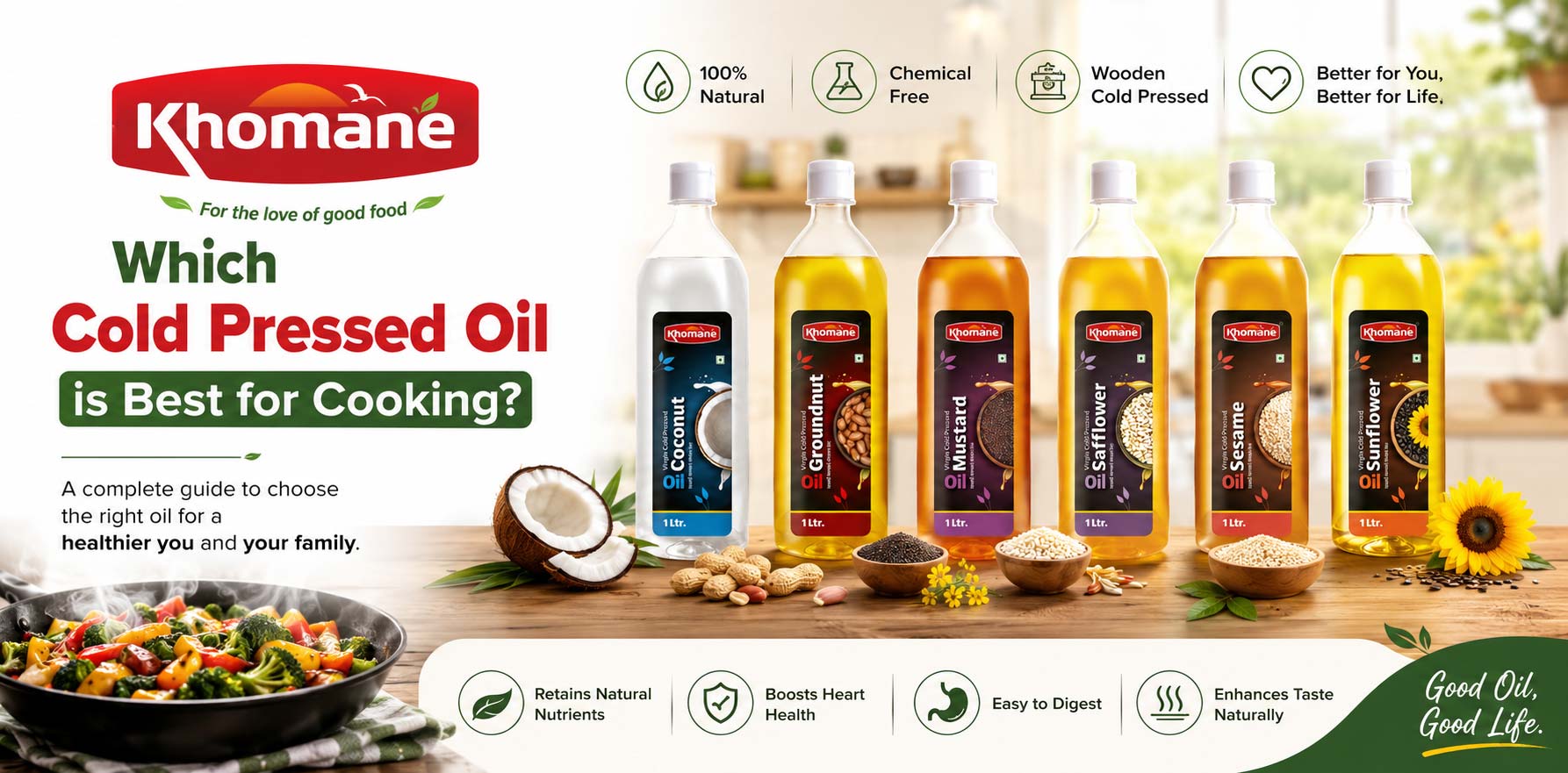
Walk into any grocery store today, and you’ll find shelves filled with different types of cooking oils. Refined oils, blended oils, cold-pressed oils, and traditional oils all promise something unique. With so many choices, it’s natural to wonder: Which cold pressed oil is best for cooking?
The answer isn’t as simple as choosing one oil for every meal.
Indian cuisine is incredibly diverse. A light vegetable stir-fry, a Maharashtrian poha, a Punjabi curry, and a South Indian coconut-based dish all have different cooking methods and flavor profiles. The right cooking oil often depends on the ingredients, the type of cooking, and regional culinary traditions.
Cold-pressed oils have gained attention because they are produced using a mechanical extraction process without excessive heat, helping preserve the oil’s natural aroma and characteristics. Many Indian households are revisiting these traditional oils as they reconnect with regional cooking practices and locally sourced ingredients.
In this guide, we’ll explain which cold pressed oil is best for cooking, how different oils are used in Indian kitchens, and how to choose the right one for your everyday cooking needs.
Is There One Best Cold Pressed Oil for Cooking?
The short answer is no.
There isn’t one cold-pressed oil that is perfect for every recipe. Instead, each oil has characteristics that make it suitable for certain cooking styles and cuisines.
Factors that influence your choice include:
- The type of dish you’re preparing
- The cooking temperature
- The flavor you want
- Regional food traditions
- Personal preferences
Just as you wouldn’t use the same spice blend for every recipe, choosing the right cooking oil depends on what you’re making.
Understanding Cold Pressed Oils
Cold pressing is a traditional extraction method where oil is mechanically extracted from seeds or nuts without the high temperatures commonly used in refining processes.
Common cold-pressed oils used in Indian kitchens include:
- Groundnut Oil
- Sesame Oil
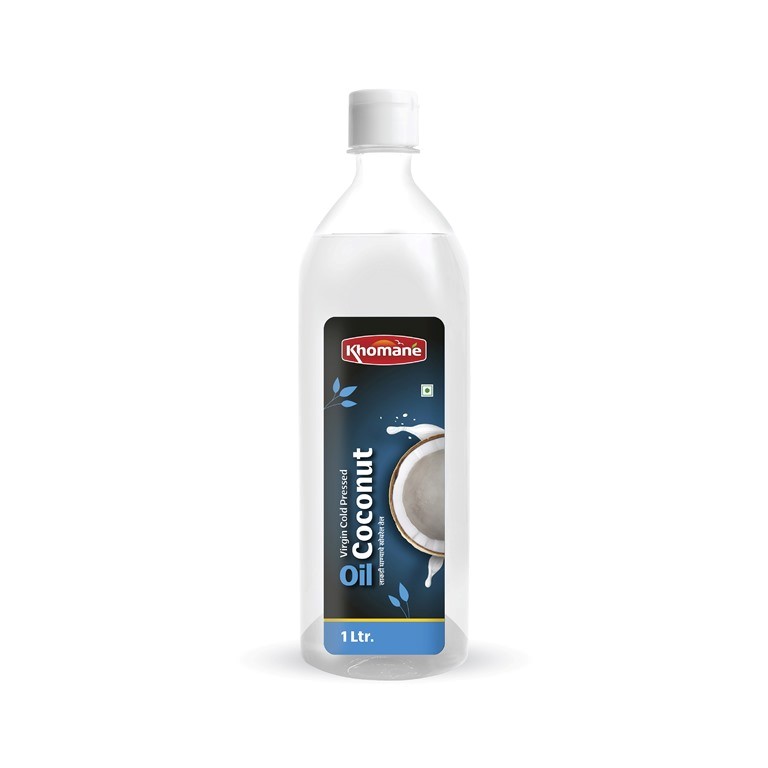
- Coconut Oil
- Mustard Oil
Each brings its own flavor, aroma, and culinary applications.
Which Cold Pressed Oil Is Good for Indian Cooking?
Indian cooking uses a variety of cooking techniques, including sautéing, roasting, tempering (tadka), shallow frying, and deep frying.
Because of this diversity, many households use more than one type of cooking oil.
Here’s a simple comparison.
| Cold Pressed Oil | Common Uses | Flavor Profile |
|---|---|---|
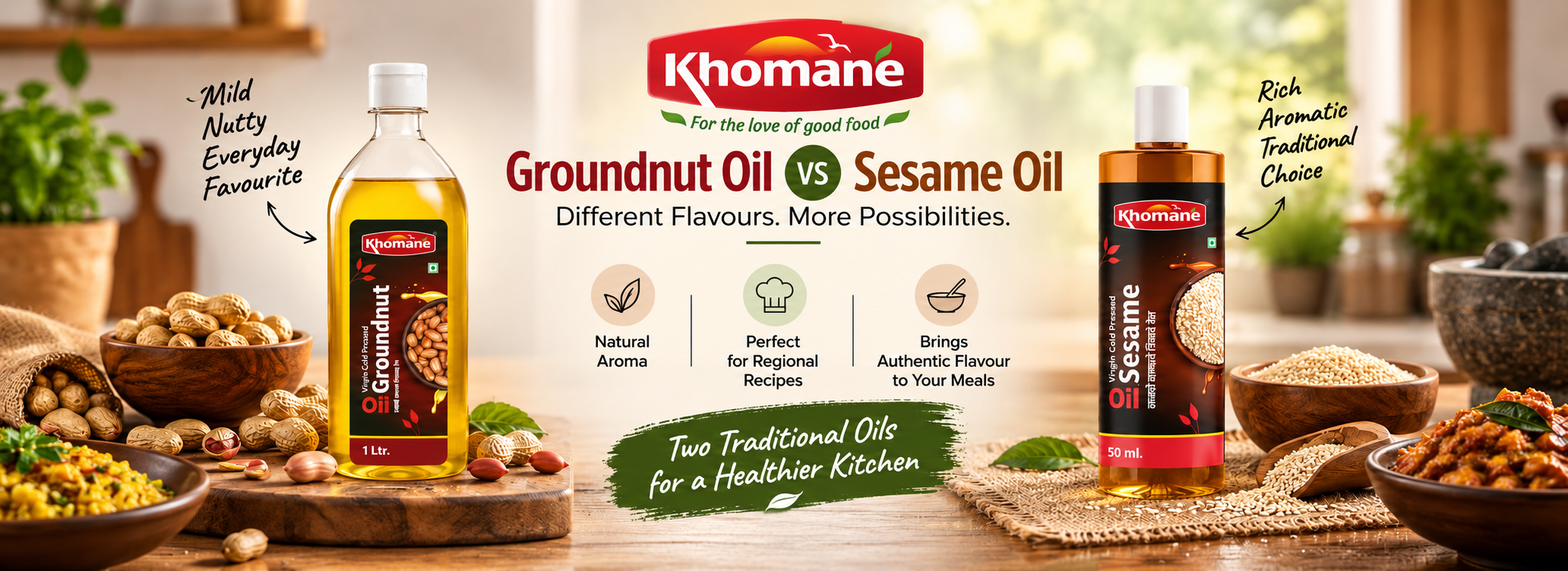
| Cold Pressed Groundnut Oil | Everyday cooking, vegetables, curries, shallow frying | Mild, nutty |
| Cold Pressed Sesame Oil | Traditional Maharashtrian, South Indian, chutneys, stir-fries | Rich, earthy |
| Cold Pressed Coconut Oil | Kerala cuisine, coastal recipes, curries | Distinct coconut aroma |
| Cold Pressed Mustard Oil | Pickles, Bengali dishes, North Indian recipes | Strong, pungent |
Rather than asking which oil is universally “best,” it is often more useful to ask which oil suits the dish you’re preparing.
Cold Pressed Groundnut Oil: A Popular Choice for Everyday Cooking
Among traditional cooking oils, cold pressed groundnut oil is widely used across many parts of India.
It is commonly chosen for:
- Daily vegetable preparations
- Dal and curries
- Stir-fried dishes
- Shallow frying
- Everyday home cooking
Its mild taste allows the natural flavors of ingredients to stand out, making it suitable for a wide variety of Indian recipes.
In Maharashtra and Gujarat, groundnut oil has long been part of everyday cooking traditions.
Cold Pressed Sesame Oil: Perfect for Traditional Recipes
Sesame oil has been part of Indian kitchens for generations.
Its distinctive aroma makes it particularly suitable for:
- Traditional Maharashtrian dishes
- South Indian recipes
- Chutneys
- Tempering
- Vegetable preparations
Because of its rich flavor, sesame oil is often chosen when the oil itself contributes to the overall taste of the dish.
Cold Pressed Coconut Oil: A Coastal Favorite
In many coastal regions, especially Kerala, coconut oil is deeply connected to local cuisine.
It is commonly used for:
- Vegetable stir-fries
- Fish preparations
- Coconut-based curries
- Traditional Kerala dishes
Its natural coconut aroma complements recipes where coconut is already an important ingredient.
Cold Pressed Mustard Oil: Bold Flavor for Regional Cooking
Mustard oil is popular in many North and East Indian kitchens.
It is often used in:
- Bengali cuisine
- Pickles
- Traditional curries
- Marinades
Its strong, distinctive flavor makes it an excellent choice for recipes where bold taste is desired.
Which Cold Pressed Oil Is Good for Daily Cooking?
If you’re looking for a versatile option for everyday meals, many households prefer cold pressed groundnut oil because of its mild flavor and adaptability across different recipes.
However, daily cooking doesn’t necessarily mean using only one oil.
Many families choose oils based on the meal being prepared.
For example:
- Groundnut oil for everyday sabzi and curries
- Sesame oil for traditional regional recipes
- Coconut oil for coastal dishes
- Mustard oil for specific North and East Indian preparations
Using different oils can help preserve authentic regional flavors while making everyday cooking more enjoyable.
Which Cold Pressed Oil Is Best for Different Cooking Methods?
| Cooking Method | Suitable Cold Pressed Oils |
|---|---|
| Everyday Cooking | Groundnut Oil |
| Stir Fry | Groundnut Oil, Sesame Oil |
| Tadka (Tempering) | Sesame Oil, Groundnut Oil |
| Traditional Maharashtrian Recipes | Groundnut Oil, Sesame Oil |
| South Indian Recipes | Sesame Oil, Coconut Oil |
| Bengali Recipes | Mustard Oil |
| Pickles | Mustard Oil |
| Vegetable Curries | Groundnut Oil |
| Coconut-Based Dishes | Coconut Oil |
Remember that these are traditional culinary preferences and can vary depending on regional recipes and personal taste.
How to Choose the Right Cold Pressed Oil
When selecting a cold-pressed oil, consider the following:
Think About Your Cooking Style
Do you mostly prepare vegetables, curries, stir-fries, or traditional regional dishes?
Choose an oil that complements your regular cooking habits.
Read the Label
Look for information about:
- Cold-pressed extraction
- Ingredients
- Packaging date
- Storage recommendations
Buy From Trusted Sources
Choosing products from organizations that work closely with farmers helps improve transparency throughout the agricultural value chain.
Farmer-led organizations such as Khomane Agro, a Farmer Producer Company, focus on creating value-added agricultural products while supporting farming communities.
Store Oil Properly
Store cold-pressed oils:
- In a cool, dry place
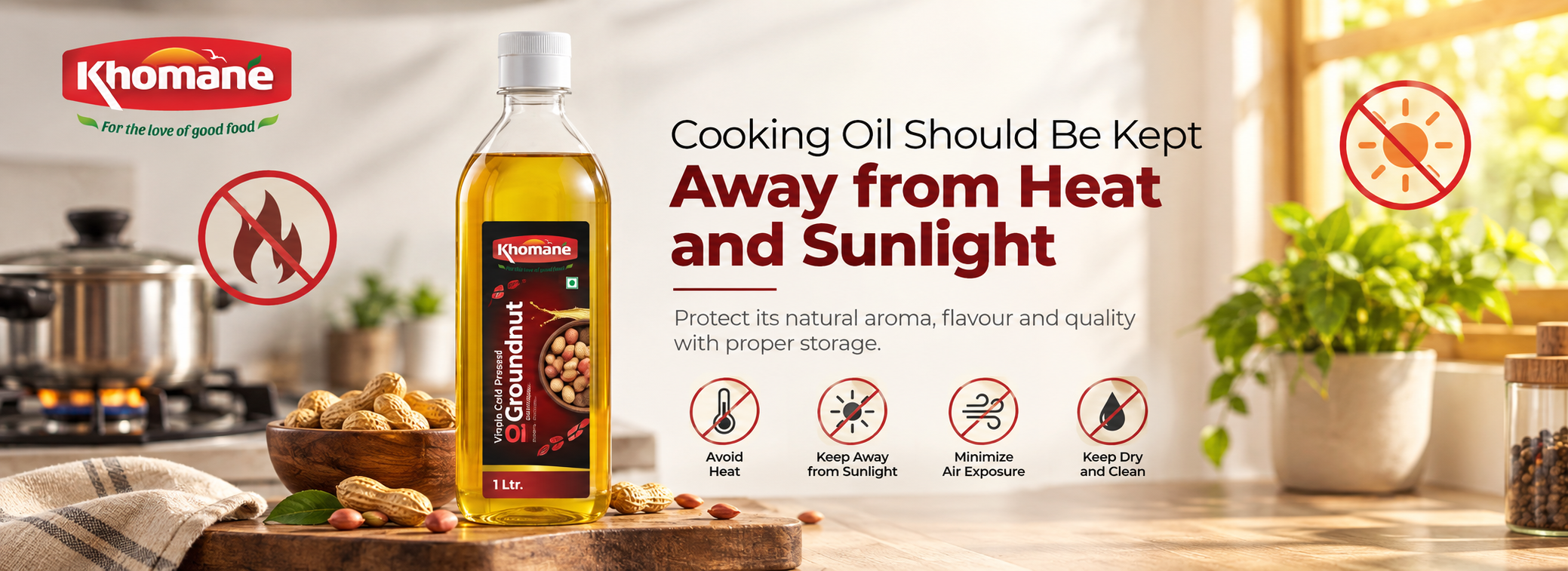
- Away from direct sunlight
- With the lid tightly closed
Proper storage helps maintain the oil’s quality over time.
Why More Indian Families Are Rediscovering Traditional Oils
Across India, there is growing interest in understanding where food comes from and how it is produced.
Traditional cooking oils are part of India’s culinary heritage, with different regions using oils suited to local crops, climate, and food culture.
Organizations like Khomane Agro contribute to this tradition by working with farmers, supporting agricultural value addition, and bringing farm-based products closer to consumers. As a Farmer Producer Company, Khomane Agro represents a collaborative approach that connects agriculture, processing, and everyday kitchens.
Frequently Asked Questions
1. Which cold pressed oil is best for cooking?
There is no single best cold-pressed oil for every recipe. Groundnut, sesame, coconut, and mustard oils each have unique culinary uses depending on the dish, cooking method, and regional preferences.
2. Which cold pressed oil is good for Indian cooking?
Groundnut oil is a versatile option for many Indian recipes, while sesame, coconut, and mustard oils are traditionally used in specific regional cuisines.
3. Which cold pressed oil is good for daily cooking?
Many households use cold-pressed groundnut oil for daily cooking because of its mild flavor and versatility. Others may use different oils depending on the recipe.
4. Can I use one cold pressed oil for all recipes?
While you can use one oil for many dishes, using different cold-pressed oils for different cuisines helps preserve traditional flavors and cooking styles.
5. Is cold pressed oil suitable for frying?
Many cold-pressed oils are used in Indian cooking, including shallow frying and other cooking methods. The choice depends on the specific oil and the recipe being prepared.
6. Which cold pressed oil is commonly used in Maharashtra?
Groundnut oil and sesame oil are traditionally used in many Maharashtrian households and complement a wide variety of regional dishes.
7. How do I choose the right cold pressed oil?
Consider your cooking style, preferred flavors, regional recipes, product labeling, and purchase from trusted producers or Farmer Producer Companies such as Khomane Agro.
Conclusion
When asking “Which cold pressed oil is best for cooking?”, the better question might be, “Which cold pressed oil is best for the food I love to cook?”
India’s diverse culinary traditions have always embraced different oils for different purposes. From the mild versatility of groundnut oil to the rich aroma of sesame oil, the distinctive character of coconut oil, and the bold flavor of mustard oil, each has a place in the Indian kitchen.
Understanding these traditional choices helps you appreciate not only the flavors on your plate but also the journey behind every bottle of oil. Farmer-led organizations like Khomane Agro play an important role in this journey by supporting value addition, responsible processing, and stronger connections between farmers and consumers.
Choosing the right cold-pressed oil is ultimately about finding the one that complements your cooking style while celebrating India’s rich agricultural and culinary heritage