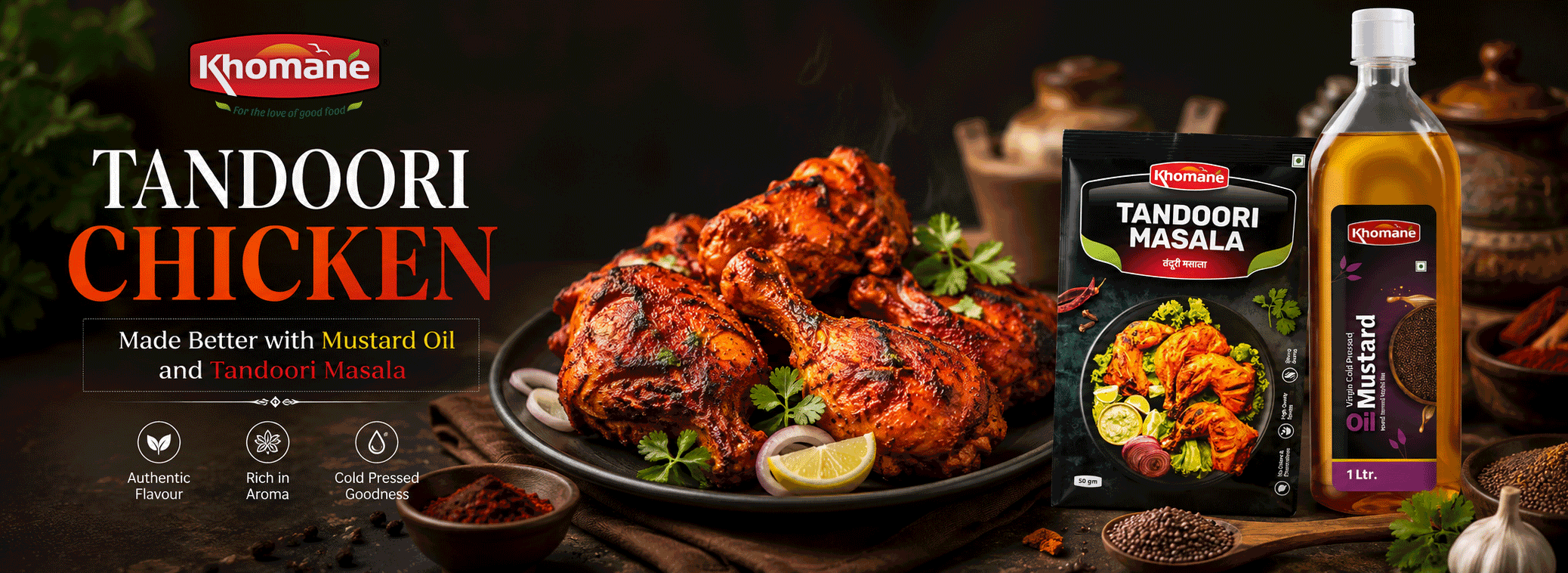
There’s something about the smoky, charred edges of restaurant-style tandoori chicken that’s hard to recreate at home — until you get the marinade right. The secret usually isn’t a fancy tandoor oven; it’s the combination of thick curd, the right spice blend, and a bold, pungent oil that carries the flavour deep into the meat. This tandoori chicken recipe with mustard oil walks you through exactly that, using a simple two-stage marinade built around mustard oil and tandoori masala.
The best part is that you don’t need a clay tandoor at all. This recipe works just as well in a regular oven, an air fryer, or even a heavy pan on your stovetop, so you can get that restaurant-style result with whatever equipment you already have in your kitchen.
Why Mustard Oil Is Used in Tandoori Chicken Marinade
Mustard oil has a strong, distinctive flavour that sets it apart from more neutral cooking oils, and that’s exactly why it works so well in a tandoori marinade. It pairs naturally with curd, ginger-garlic paste, and ground spices, helping the marinade cling to the chicken while contributing to the bold, punchy taste that people associate with good tandoori-style food.
When combined with tandoori masala, mustard oil helps the spice blend coat each piece of chicken more evenly, so the flavour isn’t just on the surface – it works its way into the meat during marination. It’s a traditional pairing in a lot of North Indian marinades and grilled preparations, and it’s part of what gives homemade tandoori chicken that “restaurant” character instead of tasting flat.
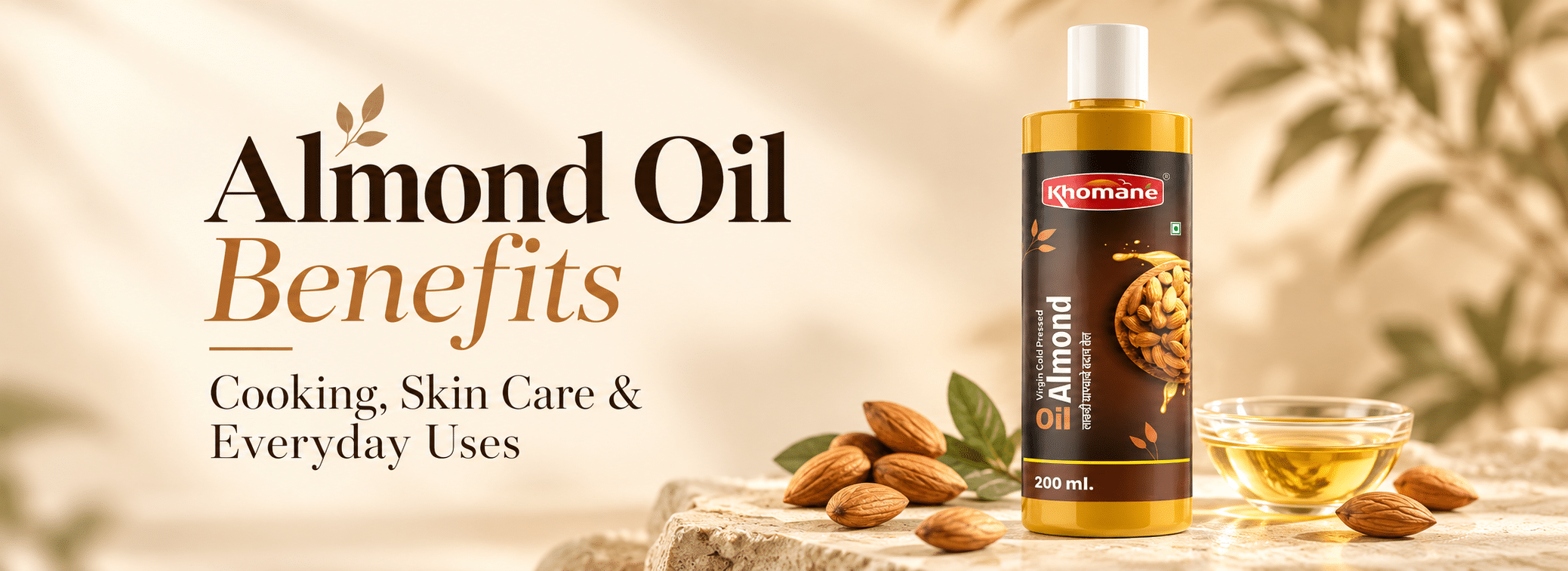
Prepare the marinade with Khomane Agro Mustard Oil.
Ingredients for Mustard Oil Tandoori Chicken
For the first marinade
- Chicken pieces (bone-in or boneless)
- Lemon juice
- Ginger-garlic paste
- Salt
- Red chilli powder
For the second marinade
- Thick curd (hung curd works best)
- Mustard oil
- Khomane Agro Tandoori Masala
- Kashmiri red chilli powder
- Garam masala
- Kasuri methi (dried fenugreek leaves), crushed
- Ginger-garlic paste
- Lemon juice
- Salt
- Butter or oil, for brushing while cooking
Quantities aren’t fixed here on purpose — how much of each ingredient you use will depend on the amount of chicken you’re cooking and how spicy you like it. As a general starting point, work with 1 kg of chicken and adjust the marinade quantities up or down from there.
How to Prepare the Tandoori Chicken Marinade
Step 1: Prepare the chicken
Clean the chicken and pat it completely dry with a kitchen towel. If you’re using thicker pieces like leg or thigh, make a few shallow cuts into the flesh – this lets the marinade reach beneath the surface instead of sitting only on top.
Step 2: Apply the first marinade
In a bowl, mix together lemon juice, ginger-garlic paste, salt, and red chilli powder. Rub this mixture generously over the chicken, making sure it gets into the cuts you made earlier. Let it rest for about 20–30 minutes. This step helps tenderize the chicken and builds a base layer of flavour before the main marinade goes on.
Step 3: Prepare the mustard oil marinade
In a separate bowl, whisk together thick curd, mustard oil, tandoori masala, kasuri methi, chilli powder, and salt. Mix until you get a smooth, thick paste — it shouldn’t be runny, since a thinner marinade won’t cling to the chicken properly.
Step 4: Marinate the chicken
Coat every piece of chicken evenly in the mustard oil marinade, pressing it in with your hands so it sticks well. Cover and refrigerate for at least several hours, or ideally overnight, for the best flavour and texture.
Get mustard oil and tandoori masala together in one combo.
How to Make Tandoori Chicken Without a Tandoor
Oven method
Preheat your oven to a high temperature suited for grilling. Place the marinated chicken on a rack or a lined tray, leaving space between each piece so the heat circulates evenly. Brush lightly with butter or oil before cooking, and flip the pieces partway through for even browning on both sides. Cook until the chicken is fully done and reaches a safe internal temperature.
Air-fryer method
Preheat the air fryer. Arrange the chicken pieces in a single layer without overcrowding the basket, since crowding will steam the chicken instead of giving it a char. Flip halfway through cooking, brushing with a little oil if the pieces look dry, and continue cooking until done.
Pan or tawa method
Heat a heavy-bottomed pan with a small amount of oil. Cook the chicken over medium heat, turning it regularly so it cooks through evenly without burning on the outside. In the last few minutes, raise the heat briefly to get some light charring on the surface, which mimics the tandoor’s smoky finish.
Cooking time will vary depending on which method you use, the cut of chicken, and how thick the pieces are — so it’s worth checking doneness rather than relying purely on the clock.
How to Add Smoky Dhungar Flavour
If you want that authentic tandoor-style smokiness, you can use the traditional dhungar method after the chicken is cooked:
- Heat a small piece of charcoal until it’s glowing red.
- Place it carefully in a small heat-safe bowl.
- Set the bowl in the centre of your cooked chicken, in a larger vessel with a lid.
- Add a few drops of ghee or oil onto the hot charcoal — it will start smoking immediately.
- Cover the vessel right away to trap the smoke around the chicken for a few minutes.
- Remove the charcoal bowl before serving.
Handle the hot charcoal with tongs, keep it away from flammable surfaces, and make sure the area is well ventilated while you do this step.
Tips for Restaurant-Style Tandoori Chicken
- Use thick curd rather than watery curd, or hang the curd for a while to drain excess liquid.
- Always pat the chicken dry before marinating so the marinade can grip it properly.
- Score thicker pieces so the flavour penetrates evenly.
- Don’t overdo the lemon juice, as too much can make the texture mushy.
- Give the chicken enough time to marinate — rushing this step shows in the final flavour.
- Avoid overcrowding the oven tray or air fryer basket.
- Brush lightly with oil or butter while cooking to keep the chicken from drying out.
- Watch the chicken closely near the end so it doesn’t overcook.
- Add the smoky flavour only after the chicken is cooked, not before.
- Serve immediately for the best texture — tandoori chicken loses some of its appeal as it sits.
Turn the Leftover Tandoori Chicken into Mughalai Chicken
If you end up with leftover tandoori chicken, it doesn’t have to just be reheated and eaten the same way again. It works well as the base for a rich Mughalai-style gravy, giving you an entirely different dish for a second meal.
Suggested ingredients
- Leftover tandoori chicken
- Onion paste
- Tomato puree
- Ginger-garlic paste
- Curd or cream
- Khomane Agro Mughalai Masala
- Mustard oil or another cooking oil of your choice
- Salt
- Fresh coriander, for garnish
Quick method
- Heat oil in a pan.
- Cook the onion paste until it turns lightly golden.
- Add ginger-garlic paste and tomato puree, cooking until the raw smell fades.
- Stir in the Mughalai Masala and salt.
- Add curd or cream, depending on how rich you want the gravy.
- Add the cooked tandoori chicken pieces.
- Simmer until the gravy thickens to your preferred consistency.
- Garnish with coriander and serve hot.
This is a practical way to stretch a single batch of marinated, cooked chicken into two different meals, using the same core spice combo in a new way.
Use the complete combo for tandoori chicken and Mughalai gravy.
What to Serve with Tandoori Chicken
- Mint chutney
- Onion rings
- Lemon wedges
- Naan
- Roti
- Jeera rice
- Fresh salad
- Mughalai-style gravy (using the leftover chicken method above)
Common Tandoori Chicken Mistakes to Avoid
- Using watery curd instead of thick or hung curd
- Skipping the first marinade and going straight to the spice paste
- Adding too much lemon juice, which can make the texture mushy
- Over-marinating with excess paste that doesn’t fully cook off
- Cooking the chicken straight from the fridge without letting it come closer to room temperature
- Overcrowding the tray or air fryer basket
- Cooking on too high heat for too long, which burns the spice coating before the inside is done
- Undercooking bone-in pieces, especially near the bone
- Relying only on cooking time instead of actually checking that the chicken is done
Make More Than One Dish with One Khomane Agro Combo
Tandoori Masala
Useful for tandoori chicken, chicken tikka, paneer tikka, grilled vegetables, and other tandoori-style snacks.
Mustard Oil
Works well in chicken marinades, achari-style recipes, other masala-based dishes, and traditional Indian cooking more broadly.
Mughalai Masala
Suited to Mughalai chicken, creamy chicken gravies, paneer Mughalai, rich festive curries, and slow-cooked masala gravies.
Having all three in one combo means you’re not just making one recipe — you’re set up for grilled dishes, everyday marinades, and richer gravy-based meals as well.
Shop the Tandoori Masala, Mustard Oil and Mughalai Masala Combo
Product: Tandoori Masala, Mustard Oil & Mughalai Masala Combo
Best for: Homemade tandoori dishes, chicken marinades, grilled recipes, and rich Mughalai-style gravies
Includes:
- Tandoori Masala
- Mustard Oil
- Mughalai Masala
[Shop the Tandoori Cooking Combo → Tandoori Masala & Mustard Oil Combo]
Frequently Asked Questions
1. Why is mustard oil used in tandoori chicken? Mustard oil adds a bold aroma and distinctive taste that works well with curd, chilli, ginger-garlic paste, and tandoori spices.
2. Can I make tandoori chicken without a tandoor? Yes. It can be prepared in an oven, air fryer, pan, or on a tawa. The texture and cooking time may vary depending on the method you choose.
3. How long should chicken be marinated? The chicken should be given enough time to absorb the flavours — several hours to overnight works well. Follow safe refrigeration practices and avoid leaving raw chicken at room temperature for extended periods.
4. Can I use boneless chicken? Yes. Boneless chicken can be used, but it tends to cook faster than bone-in pieces, so adjust your cooking time accordingly.
5. What is Mughalai Masala used for? Mughalai Masala works well in rich gravies, creamy curries, and festive-style chicken or paneer dishes.
6. Can leftover tandoori chicken be added to gravy? Yes. Properly stored leftover tandoori chicken can be added to a Mughalai-style gravy and simmered until heated thoroughly.
7. Which products are included in the combo? The combo includes Tandoori Masala, Mustard Oil, and Mughalai Masala.
Conclusion
Making flavourful tandoori chicken at home gets a lot simpler when the right marinade ingredients and spice blends are all in one place. This tandoori chicken recipe with mustard oil uses tandoori masala for the main marinade, while Mughalai masala gives you a way to turn the same batch of chicken into a completely different, rich gravy dish later on.
Explore the Khomane Agro Tandoori Masala, Mustard Oil, and Mughalai Masala Combo to make grilled, tandoori-style, and Mughalai dishes at home, all from one set of everyday kitchen staples.
[Bring Home the Complete Tandoori and Mughalai Cooking Combo → 087673 06068]