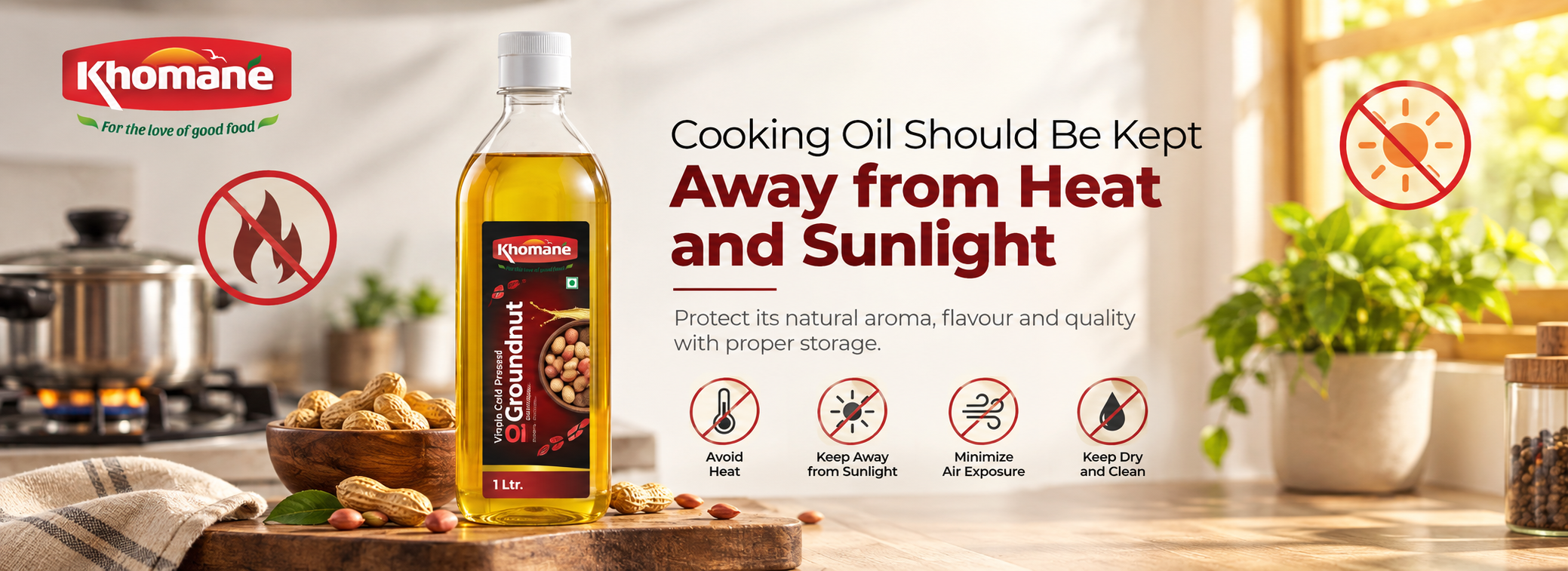
Cooking oil should be kept away from heat and sunlight because exposure to light, warmth, air and moisture can accelerate oxidation. Over time, this may change the oil’s aroma, flavour, colour and overall quality. Storing oil beside the stove or near a sunny window can therefore shorten its usable life after opening.
Proper cooking oil storage is particularly important for cold-pressed oils because their natural aroma and flavour are part of what makes them distinctive. A cool, dark cupboard and a tightly closed container can help protect these qualities for longer.
What Happens When Cooking Oil Is Exposed to Heat?
Heat speeds up chemical reactions within cooking oil. Although oil is naturally heated during cooking, continuous exposure to warmth while it is being stored is unnecessary.
A bottle placed beside the gas stove, oven or another heat-producing appliance may experience repeated temperature changes throughout the day. This can contribute to gradual deterioration even when the oil is not being used.
Can Heat Make Cooking Oil Rancid?
Heat can accelerate oxidation, one of the main processes associated with rancidity. Rancid oil may develop:
- A stale or unpleasant smell
- A bitter, sharp or unusual taste
- Changes in colour
- A thicker or sticky texture
- An aroma different from that of fresh oil
Do not taste questionable oil simply to determine whether it is usable. If the smell, appearance or texture seems abnormal, it is safer to avoid using it.
How Does Sunlight Affect Cooking Oil?
Sunlight contains light energy and can also increase the temperature of the bottle. Prolonged exposure can accelerate oxidation and affect the natural quality of the oil.
This is why keeping transparent oil bottles on an open shelf near a kitchen window is not recommended. Even decorative glass bottles should be stored away from direct sunlight.
Does Indoor Light Also Affect Cooking Oil?
Direct sunlight is a greater concern, but long-term exposure to strong indoor lighting may also be unhelpful. A closed kitchen cabinet offers better protection than an open countertop, especially when the bottle is transparent.
Why Does Air Exposure Matter?
Every time an oil container is opened, the oil comes into contact with oxygen. This is normal, but leaving the cap loose or transferring oil into a poorly sealed container increases unnecessary air exposure.
To help prevent cooking oil from going rancid:
- Close the cap immediately after use.
- Avoid leaving the bottle open while cooking.
- Use a container with a secure lid.
- Do not store oil in an uncovered dispenser.
- Avoid transferring oil repeatedly between containers.
Buying a container size that matches your household consumption can also help. A very large pack that remains open for a long period may experience more exposure than a smaller pack used regularly.
What Is the Best Place to Store Cooking Oil?
The best place to store cooking oil is a cool, dry and dark cabinet located away from heat-generating appliances.
Suitable locations include:
- A closed kitchen cabinet
- A pantry shelf away from sunlight
- A cupboard away from the stove
- A clean, dry storage area with a stable temperature
Avoid storing cooking oil:
- Directly beside or above the gas stove
- Near an oven, microwave or toaster
- On a windowsill
- In direct sunlight
- Inside a hot vehicle
- Near a sink where water may enter the container
How to Store Cold-Pressed Oil Correctly
Correct cold-pressed oil storage helps protect its characteristic taste and aroma.
1. Keep It in Its Original Container
The original food-grade packaging is generally the simplest storage option. It also retains the batch details, best-before date, ingredients and storage instructions.
If you transfer the oil, use a clean, dry, food-grade container with a tightly fitting lid.
2. Keep the Cap Tightly Closed
Close the container immediately after pouring. A loose cap allows more contact with air and may also permit dust or moisture to enter.
3. Use a Clean and Dry Pouring Method
Do not insert a wet spoon or ladle into an oil container. Water may cause splattering when the oil is later heated and can affect storage quality.
4. Avoid Mixing Old and New Oil
Do not add fresh oil to a container holding older or previously heated oil. Mixing them makes it difficult to track freshness and does not restore the quality of old oil.
5. Follow the Label Instructions
Different oils may have different storage requirements. Always check the manufacturer’s label and use the oil within the recommended period after opening.
Does Cooking Oil Need Refrigeration?
Most everyday cooking oils are commonly stored in a cool, dark cupboard unless the label advises otherwise. Refrigeration may cause some oils to appear cloudy, thicken or solidify. Coconut oil, for example, naturally becomes solid at lower temperatures.
These physical changes do not automatically mean the oil has spoiled. However, storage guidance can differ by product, so follow the directions printed on the pack.
Should Cooking Oil Be Stored in Glass or Plastic?
Both glass and food-grade plastic containers can be suitable when properly designed for edible oil. The more important factors are protection from heat, sunlight, air and moisture.
Dark-coloured or opaque containers offer additional protection from light. If using a transparent container, keep it inside a closed cupboard.
Never reuse household chemical or non-food containers for cooking oil.
Signs That Cooking Oil May Have Gone Bad
Check the oil before use, especially when the bottle has been open for a long time. Warning signs include:
- An unpleasant, stale or paint-like smell
- A bitter or unusually sharp taste noticed in cooked food
- Unexpected darkening
- Thick, sticky consistency
- Unusual foaming during heating
- Smoke appearing earlier than expected
- Contamination by water or food particles
Natural differences in colour or sediment may occur in some cold-pressed oils. These should not be confused automatically with spoilage. Consider the oil’s smell, storage history, label information and best-before date together.
Common Cooking Oil Storage Mistakes
Avoid these frequent mistakes:
- Keeping the bottle beside the stove.
- Leaving the container in direct sunlight.
- Forgetting to close the cap.
- Using a wet spoon or funnel.
- Mixing fresh oil with old oil.
- Storing oil in an unsuitable container.
- Ignoring the best-before date.
- Keeping large quantities open for too long.
FAQs About Cooking Oil Storage
Why should oil not be stored near the gas stove?
Heat from the stove can expose the oil to repeated temperature changes and accelerate deterioration. Store it in a separate, cool cabinet.
Can cooking oil be stored in a transparent bottle?
Yes, but the bottle should be kept inside a dark cupboard and away from sunlight and heat.
How long does cooking oil last after opening?
It depends on the type of oil, packaging and storage conditions. Check the label and use it within the manufacturer’s recommended period.
Is cloudy cooking oil spoiled?
Not always. Some oils naturally become cloudy or solid at lower temperatures. Check the label, aroma, storage history and other signs before deciding.
Can oil be transferred into a steel container?
A clean, dry, food-grade container with a secure lid may be used. Retain the original label details, including the best-before date and batch information.
Should cold-pressed oil be stored differently?
Cold-pressed oil should be protected from heat, sunlight, air and moisture. Follow the storage instructions on its packaging.
Protect the Natural Flavour of Your Cooking Oil
Keeping cooking oil away from heat and sunlight is a simple step that helps preserve its aroma, flavour and quality. Store the bottle in a cool, dark cupboard, close it tightly after every use and follow the label instructions.
Explore Khomane Agro’s range of traditionally produced cold-pressed oils for everyday Indian cooking.
🌐 Website: www.khomaneagro.com
🛒 Available on: Amazon India
📞 Call/WhatsApp: +91 87673 06068
📧 Email: khomaneagrofpc@gmail.com
📍 Khomane Agro Farmer Producer Company Limited: Gat No. 498, Korhale Budruk, Baramati, Maharashtra – 412103
Choose Khomane Agro cold-pressed oils and store them carefully to enjoy their natural flavour in every meal.