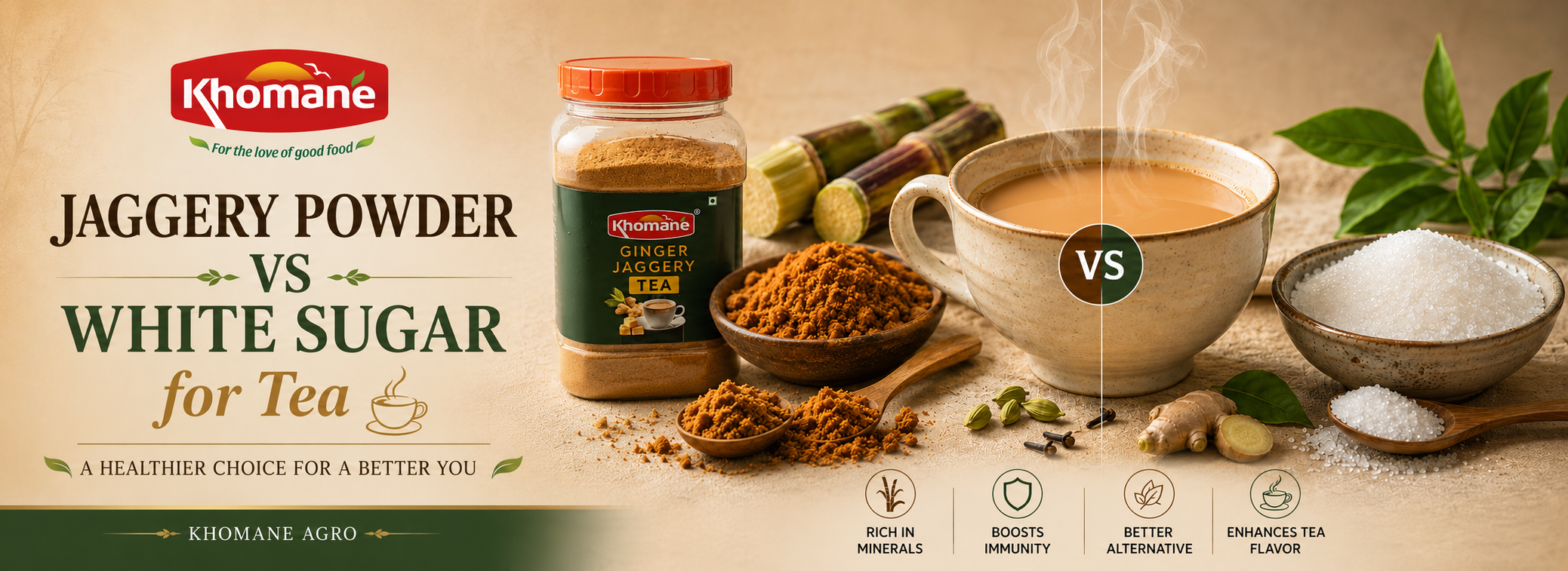
When comparing jaggery powder vs white sugar for tea, the best choice depends on more than sweetness. Taste, convenience, preparation, storage and cost all influence which option works better for your daily chai. White sugar offers a familiar, consistent sweetness, while jaggery powder for tea brings a deeper, caramel-like flavour inspired by traditional Indian kitchens.
If you are considering a switch from regular sugar to gud wali chai, this guide explains the practical differences and helps you decide which sweetener suits your preferences, budget and routine.
What Is Jaggery Powder for Tea?
Jaggery powder is a powdered sweetener commonly made from concentrated sugarcane juice. Unlike solid jaggery blocks, its loose texture makes it easier to measure, store and add to beverages or recipes.
Many households prefer jaggery powder for tea because it provides the traditional flavour of gud without requiring the jaggery to be chopped or crushed before use.
Depending on the product and production method, jaggery powder may have:
- A golden to brown colour.
- A rich, caramel-like flavour.
- A slightly earthy aroma.
- A granular or powdered texture.
- Natural variation between batches.
When buying jaggery powder, always check the ingredient list, manufacturing details and storage instructions. Product colour or packaging alone cannot establish purity.
What Is White Sugar?
White sugar is a refined sweetener commonly used in tea, coffee, desserts and everyday cooking.
Its popularity comes from its predictable taste, easy availability and convenient use.
White sugar generally offers:
- A clean, straightforward sweetness.
- Consistent granule size.
- Quick dissolving in hot tea.
- Minimal impact on tea colour or aroma.
- Broad availability across different price ranges.
Unlike jaggery powder, white sugar typically does not add a strong caramel or earthy flavour to tea.
Jaggery Powder vs White Sugar for Tea: Quick Comparison
| Comparison factor | Jaggery powder | White sugar |
| Taste | Rich, caramel-like and slightly earthy | Clean, neutral sweetness |
| Aroma | Distinctive traditional gud aroma | Minimal aroma |
| Tea colour | May produce a deeper brown colour | Usually has less impact on colour |
| Preparation | Best added carefully, especially in milk tea | Can usually be added during boiling |
| Texture | Powdered or granular; may vary by brand | Uniform crystals |
| Storage | Should be protected from moisture | Generally convenient to store |
| Cost | Often priced higher, depending on quality and brand | Often more economical |
| Best suited for | Gud wali chai, ginger tea, masala tea and traditional flavours | Standard milk tea and consistent everyday sweetness |
| Sweetness | Can vary slightly by product and batch | Generally consistent |
| Important consideration | Requires careful handling in milk tea | Offers convenience but limited flavour complexity |
Jaggery Powder vs White Sugar: Which Tastes Better in Tea?
The biggest difference between jaggery tea vs sugar tea is the flavour.
How Jaggery Powder Changes the Taste of Tea
Jaggery powder for tea adds more than sweetness. It contributes a rounded, caramel-like flavour that can make chai feel warmer and more aromatic.
It pairs particularly well with:
- Ginger tea.
- Cardamom tea.
- Masala chai.
- Black tea.
- Traditional milk tea.
- Mildly spiced tea blends.
For example, ginger and jaggery often work well together because the sharpness of ginger balances the deeper sweetness of gud.
However, jaggery has a noticeable flavour. If you enjoy the clean taste of plain tea without additional flavour notes, you may need time to adjust.
How White Sugar Changes the Taste of Tea
White sugar sweetens tea without significantly changing its overall flavour profile.
This can be useful when you want the taste of the tea leaves, milk or spices to remain the main focus.
White sugar is also easier to standardise when making tea for several people because its sweetness is generally more consistent.
Which Sweetener Wins on Taste?
There is no universal winner.
Choose jaggery powder for tea if you enjoy:
- Traditional flavours.
- Richer sweetness.
- A subtle caramel-like taste.
- Gud wali chai.
- Tea with ginger, cardamom or spices.
Choose white sugar if you prefer:
- Straightforward sweetness.
- A familiar flavour.
- Consistent results.
- Minimal change to the tea’s aroma.
The best choice is the one you genuinely enjoy and can use appropriately within your overall diet.
How to Use Jaggery Powder for Tea
Preparing tea with jaggery powder requires slightly more attention than preparing tea with white sugar.
This is particularly important when making milk tea because some jaggery products can cause milk to split if added incorrectly.
How to Make Jaggery Tea Without Curdling Milk
Use the following method for gud wali chai:
- Boil water with tea leaves and your preferred spices.
- Add ginger or cardamom if desired.
- Add milk and let the tea cook as usual.
- Switch off the heat after the tea is prepared.
- Allow the tea to cool slightly.
- Add a small amount of jaggery powder.
- Stir until the jaggery dissolves.
- Strain and serve.
Another practical method is to add the jaggery powder directly to the serving cup and pour the prepared tea over it.
This reduces the chance of prolonged boiling after the jaggery is added.
Why Can Milk Curdle in Jaggery Tea?
Milk may split when certain jaggery products are added while the tea is boiling vigorously. Differences in acidity, product composition, milk freshness and temperature can all affect the outcome.
To reduce the risk:
- Use fresh milk.
- Avoid adding jaggery to rapidly boiling tea.
- Add jaggery after switching off the heat.
- Start with a small quantity.
- Mix well before serving.
These steps can make it easier to prepare smooth, flavourful jaggery tea.
Can You Add Jaggery Powder to Black Tea?
Yes. Jaggery powder for black tea can be added directly because there is no milk to split.
It pairs well with ginger, lemon-free herbal blends and other spice-based preparations.
If you are trying it for the first time, add a smaller amount initially and adjust according to taste.
How Much Jaggery Powder Should You Add to Tea?
There is no fixed quantity because sweetness varies by product and personal preference.
A practical approach is to begin with a small amount and gradually adjust.
For example:
- Start with approximately one teaspoon for a standard cup.
- Taste the tea before adding more.
- Adjust according to the strength of the tea and the quantity of milk.
- Remember that different jaggery powders may taste different.
If you currently use one teaspoon of white sugar, do not assume that exactly the same quantity of jaggery will always provide your preferred sweetness.
The right amount depends on the product and how sweet you like your chai.
White Sugar vs Jaggery Powder: Which Is Easier to Use?
Convenience matters when you make tea every day.
Convenience of White Sugar for Tea
White sugar is simple to use because it:
- Dissolves quickly in hot liquids.
- Can generally be added while the tea is boiling.
- Has a consistent texture.
- Is easy to measure.
- Requires minimal adjustment to your existing tea-making routine.
For busy households, these practical advantages can be appealing.
Convenience of Jaggery Powder for Tea
Jaggery powder is more convenient than a solid jaggery block because it does not need to be broken into smaller pieces.
Its powdered format is useful for:
- Everyday tea.
- Coffee.
- Traditional sweets.
- Breakfast recipes.
- Homemade desserts.
- Selected savoury preparations.
However, it should be stored carefully because exposure to humidity may cause clumping.
For milk tea, adding it at the right stage also takes a little more attention.
Jaggery Powder vs Jaggery Cubes for Tea
Both forms can work well, but they offer different benefits.
Jaggery powder is useful when you want:
- Flexible quantity control.
- Easy mixing.
- Use across several recipes.
- Quick adjustment of sweetness.
Jaggery cubes may be useful when you prefer:
- Convenient portions.
- Easy handling.
- A less messy format.
- A simple serving option for tea or coffee.
The better choice depends on how you prepare your beverages and whether you also use jaggery in cooking.
Jaggery Powder Price vs White Sugar Price
The cost comparison between jaggery powder and white sugar depends on product quality, pack size, brand, location and delivery charges.
In many cases, white sugar costs less per kilogram than packaged jaggery powder. However, the actual difference per cup may be smaller than expected.
How to Calculate the Cost Per Cup
Use this simple formula:
Cost per cup = Price per kilogram ÷ Number of servings per kilogram
For example, if you use approximately 5 grams of sweetener per cup:
- One kilogram contains approximately 200 servings.
- A sweetener priced at ₹60 per kilogram costs approximately ₹0.30 per cup.
- A sweetener priced at ₹120 per kilogram costs approximately ₹0.60 per cup.
In this example, the difference is approximately ₹0.30 per cup.
These figures are illustrative only. Actual product prices, serving sizes and sweetness preferences will vary.
What Influences Jaggery Powder Price?
The jaggery powder price may vary according to:
- Raw material quality.
- Production methods.
- Packaging.
- Brand.
- Batch size.
- Processing and handling.
- Delivery charges.
- Product availability.
- Purchase quantity.
When comparing products online, calculate the price per kilogram rather than looking only at the total pack price.
A smaller pack may appear affordable but cost more per kilogram than a larger pack.
Is Jaggery Powder Worth the Extra Cost?
That depends on what matters most to you.
If you enjoy the flavour of gud wali chai, the additional cost may feel worthwhile because of the difference in taste and versatility.
If your priority is the lowest-cost sweetener for a large household, white sugar may be more practical.
The right decision depends on your budget, preferences and frequency of use.
Is Jaggery Powder Healthier Than White Sugar?
A common question in the jaggery powder vs white sugar discussion is whether jaggery is automatically a healthier choice.
Jaggery may contain small amounts of naturally occurring compounds or minerals depending on how it is produced. However, both jaggery and white sugar are concentrated sweeteners and should be consumed in moderation.
Choosing jaggery does not mean that tea becomes sugar-free or suitable for unlimited consumption.
Is Jaggery Powder Suitable for People with Diabetes?
Jaggery can affect blood glucose because it contains sugars.
People with diabetes or other medical conditions should not assume that replacing white sugar with jaggery makes a sweetened drink automatically safe.
If you need personalised dietary guidance, consult a qualified healthcare professional or registered dietitian.
Should You Choose Jaggery Only for Health Reasons?
It is better to consider the complete picture:
- Taste.
- Serving size.
- Overall diet.
- Lifestyle.
- Medical requirements.
- Personal preferences.
If you enjoy jaggery tea, use it as a flavour preference and remain mindful of the quantity.
How to Choose the Best Jaggery Powder for Tea
Not every product sold online offers the same quality or transparency.
When you buy jaggery powder online, review the product details carefully.
Check the Ingredient List
Look for a clear ingredient description.
A straightforward product should explain what it contains rather than relying only on vague claims such as “traditional” or “premium.”
If additional ingredients are included, they should be clearly disclosed.
Review the Product Label
Check for:
- Manufacturer or seller details.
- Net quantity.
- Manufacturing or packing date.
- Best-before information.
- Batch details.
- Relevant food business licensing information.
- Storage instructions.
This information helps you identify the product and understand its expected shelf life.
Be Careful with “Chemical-Free” Claims
Many people search online for chemical-free jaggery powder.
However, this phrase alone does not tell you everything about the product. Check the complete product description, ingredient list and seller transparency before buying.
Look for specific, verifiable details instead of relying only on broad marketing language.
Check Packaging Quality
Jaggery powder can absorb moisture, which may cause clumping or changes in texture.
Choose packaging that:
- Is properly sealed.
- Protects the product during shipping.
- Includes clear storage instructions.
- Can be closed securely after opening or transferred to an airtight container.
Read Customer Reviews
Customer feedback can help you understand:
- Taste.
- Texture.
- Freshness.
- Packaging quality.
- Delivery experience.
- Whether the product matches the listing.
Focus on detailed reviews rather than star ratings alone.
Best Tea Flavours to Pair with Jaggery Powder
The deeper taste of jaggery works particularly well with several popular chai variations.
Ginger Jaggery Tea
Ginger adds a warm, sharp flavour that balances the sweetness of jaggery.
This combination is popular among people who prefer strong, aromatic tea.
Elaichi Jaggery Tea
Cardamom adds a fragrant note that complements the caramel-like taste of jaggery.
Elaichi jaggery tea can be a good starting point if you are switching from regular sugar tea.
Masala Jaggery Tea
Spices such as ginger, cardamom and other traditional chai ingredients pair naturally with jaggery.
For best results, add the jaggery after the milk tea has finished boiling.
Jaggery Black Tea
Black tea with jaggery offers a simple way to experience the flavour of gud without the additional concern of milk splitting.
You can adjust the tea strength and sweetness according to your preference.
Jaggery Coffee
Jaggery powder can also be used in coffee if you enjoy a deeper, more rounded sweetness.
As with tea, begin with a small quantity and adjust to taste.
How to Store Jaggery Powder at Home
Proper storage helps maintain the texture and usability of jaggery powder for tea.
Follow these basic steps:
- Keep it in an airtight container.
- Store it in a cool, dry place.
- Avoid direct sunlight.
- Use a clean, dry spoon.
- Keep the container away from steam and moisture.
- Close the lid immediately after use.
- Follow the best-before information on the package.
Clumping can happen when jaggery powder absorbs moisture. If you notice unusual odour, visible contamination or signs of spoilage, do not use the product.
Jaggery Powder vs White Sugar for Tea: Which Should You Choose?
Choose jaggery powder if you want:
- A richer, traditional chai flavour.
- A caramel-like sweetness.
- An easy-to-use alternative to solid jaggery.
- A sweetener that also works in selected recipes.
- A simple way to prepare gud wali chai at home.
Choose white sugar if you want:
- Familiar sweetness.
- Easy preparation.
- Consistent flavour.
- A generally lower-cost option.
- Minimal changes to your existing tea-making routine.
Neither sweetener needs to be described as perfect for everyone. The most suitable option is the one that matches your taste, budget and dietary needs.
Frequently Asked Questions
1. Is jaggery powder better than white sugar for tea?
Jaggery powder offers a richer, caramel-like taste, while white sugar provides neutral sweetness. The better option depends on your flavour preferences, budget and dietary requirements.
2. Can I replace white sugar with jaggery powder in tea?
Yes. You can use jaggery powder instead of white sugar. For milk tea, add it after switching off the heat or directly to the serving cup to reduce the risk of the milk splitting.
3. Does jaggery powder make tea taste different?
Yes. Jaggery adds a deeper, slightly earthy flavour compared with the straightforward sweetness of white sugar.
4. Why does milk sometimes curdle when jaggery is added?
Milk can split because of differences in temperature, acidity, milk freshness and the composition of the jaggery. Adding jaggery after the tea has stopped boiling can help reduce this risk.
5. How much jaggery powder should I add to one cup of tea?
Start with approximately one teaspoon and adjust according to your taste. Sweetness can vary depending on the jaggery product and the strength of your tea.
6. Is jaggery powder more expensive than white sugar?
Jaggery powder is often priced higher per kilogram, but the additional cost per cup may be relatively small. Compare the price per kilogram and your usual serving size.
7. Can people with diabetes use jaggery instead of white sugar?
Jaggery contains sugars and can affect blood glucose. People with diabetes should consult a healthcare professional before changing their diet or sweetener choices.
8. Which jaggery powder is best for tea?
Look for a product with clear ingredient information, proper packaging, visible manufacturing details and a flavour you enjoy. Check the seller’s product description before purchasing.
9. Can jaggery powder be used in coffee?
Yes. Jaggery powder can add a deeper sweetness to coffee. Start with a small quantity and adjust according to your preference.
10. How should jaggery powder be stored?
Store jaggery powder in a clean, airtight container in a cool, dry place. Use a dry spoon and protect it from moisture.
11. Is jaggery powder the same as sugar-free sweetener?
No. Jaggery powder is not sugar-free. It is a sweetener and should be consumed in appropriate quantities.
12. Where can I buy jaggery powder for tea online?
You can explore jaggery products, flavoured jaggery options and tea-related products on the Khomane Agro website.
Make Every Cup of Chai More Flavourful with Khomane Agro
If you enjoy the rich, familiar taste of traditional gud wali chai, bring that flavour into your everyday routine with Khomane Agro’s jaggery products.
Explore jaggery powder, flavoured jaggery bites, Gudwali Chai and other thoughtfully selected products for your kitchen.
Ready to give your tea a traditional twist? Visit Khomane Agro and shop your favourite jaggery products today.