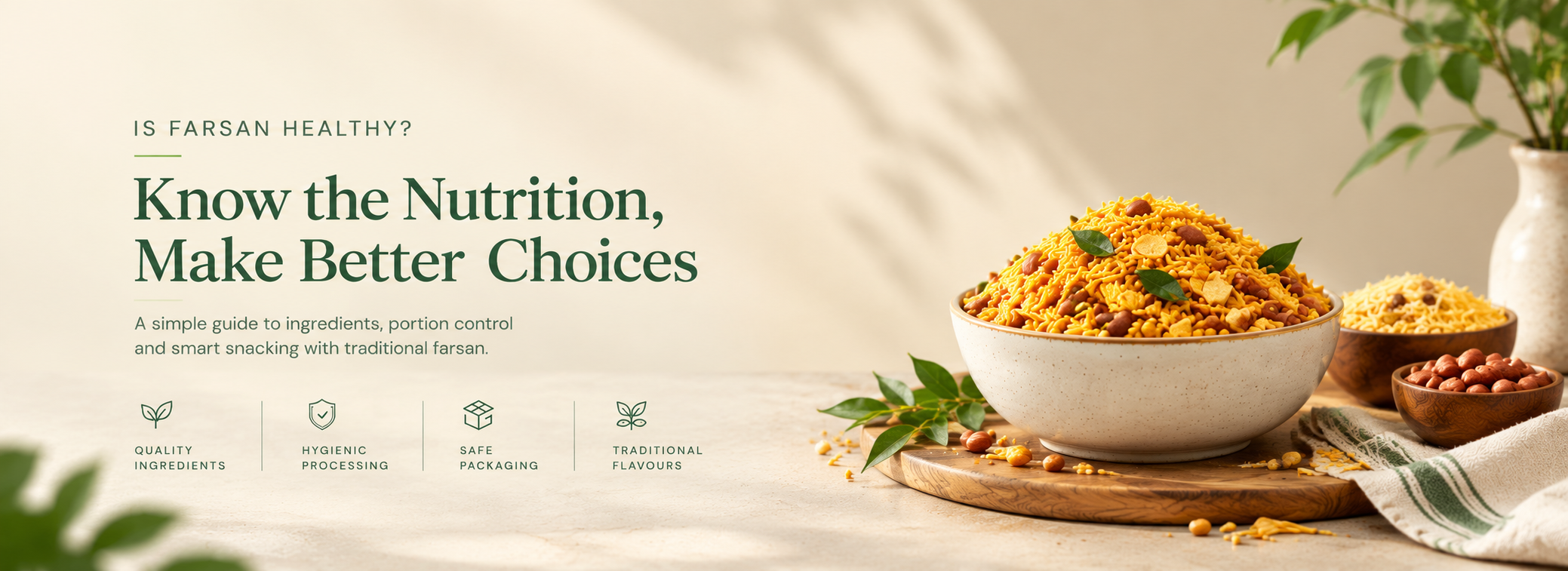
Is farsan healthy? Farsan can be enjoyed as part of a balanced diet when you consider its ingredients, preparation method, serving size and frequency of consumption. Many Maharashtrian farsan varieties are fried and seasoned, which can increase their calorie, fat and sodium content. Understanding farsan nutrition can help you make informed snack choices while enjoying traditional Indian flavours.
Whether you prefer Bhadang Bhel, Lasun Chiwda, Batata Chiwda, Navratna Farsan or Shev, choosing sensible portions and maintaining a varied diet can help you enjoy these snacks mindfully. This guide explains the nutritional considerations, portion-control tips and food-label information you should know before choosing farsan.
What Is Farsan?
Farsan is a broad category of savoury Indian snacks popular in Maharashtra, Gujarat and other parts of India. Depending on the recipe, farsan may contain gram flour, flattened rice, potatoes, lentils, peanuts, edible oil, spices and salt.
Popular varieties of farsan include:
- Bhadang and Bhadang Bhel
- Lasun Chiwda
- Batata Chiwda
- Shev
- Gathiya
- Chana Dal
- Classic Mix Farsan
- Navratna Farsan
- Special Farsan
Each variety has a different recipe, texture and nutritional profile. Therefore, all farsan cannot be considered equally healthy or unhealthy. The ingredients, cooking method, seasoning and quantity consumed determine how a particular snack fits into your overall diet.
Is Farsan Healthy According to Its Ingredients?
The nutritional value of farsan depends on its complete ingredient list rather than the product name alone. Understanding the main ingredients can help you make more informed snack choices.
1. Gram Flour and Pulses
Gram flour, lentils and other pulses are used in several Indian snack preparations. These ingredients can contribute protein, carbohydrates and some dietary fibre.
However, the nutritional value of the finished farsan also depends on the amount of oil, salt and other ingredients used. A snack containing gram flour or pulses is not automatically high in protein or low in fat.
2. Peanuts, Nuts and Seeds
Some farsan mixtures contain peanuts, cashews or seeds that contribute flavour, texture and nutrients. These ingredients can also increase the energy content of a snack because nuts and seeds are energy-dense.
If you have a peanut, tree nut, sesame or other food allergy, check the ingredient list and allergen declaration before consuming packaged farsan.
3. Oil Used in Preparation
Many farsan varieties are fried or prepared using added oil. Fat provides energy and contributes to the taste and texture of food, but fried snacks can be calorie-dense.
When choosing farsan, check the nutrition label for total fat, saturated fat and trans fat information. Consider how the snack fits into your overall daily food intake instead of judging it by taste or appearance alone.
4. Salt and Seasoning
Salt, chilli, garlic and traditional masalas give farsan its distinctive flavour. However, sodium levels can vary considerably between products and recipes.
The World Health Organization recommends that adults consume less than 2,000 mg of sodium per day, equivalent to less than 5 g of salt from all food sources combined.
If you regularly eat farsan alongside pickles, papad, sauces or other salty foods, consider your combined sodium intake. People who have been advised to restrict sodium should follow their healthcare professional’s recommendations.
What Are the Main Nutritional Concerns With Farsan?
Farsan can fit into a varied diet, but four factors deserve attention: portion size, frequency, sodium content and overall meal quality.
1. Portion Size
Farsan is easy to eat directly from a packet, particularly when watching television, working or socialising. This can make it difficult to notice how much you have consumed.
A practical way to manage portions is to:
- Check the serving size on the product label.
- Transfer one portion into a small bowl.
- Reseal the packet before eating.
- Avoid repeatedly refilling the bowl.
- Consider your overall food intake for the day.
There is no single farsan serving size that is appropriate for everyone. Your needs depend on factors such as age, activity level, dietary requirements and the nutritional composition of the snack.
2. Frequency of Consumption
Eating a small portion occasionally is different from consuming large quantities of fried or salty snacks every day.
If farsan is a regular part of your routine, alternate it with options such as fresh fruit, roasted chana, plain yoghurt, vegetables or other snacks suited to your nutritional needs.
The aim is not to eliminate traditional snacks but to maintain variety in your overall diet.
3. Sodium Content
Sodium comes from many sources, including packaged foods, sauces, pickles, papad and salt added during cooking.
Compare the sodium information on different farsan labels when choosing between products. If you have high blood pressure or have been advised to limit sodium, check the label carefully and follow your healthcare professional’s guidance.
4. Overall Meal Quality
Farsan is best treated as a snack or accompaniment rather than a regular replacement for balanced meals.
A varied diet should include suitable portions of vegetables, fruits, whole grains, pulses and protein-rich foods. Adding farsan to your diet should not mean consistently missing out on these essential food groups.
How Much Farsan Should You Eat?
There is no universal serving size for farsan because different products have different ingredients and nutritional values.
A useful starting point is to follow the serving information on the packet and consider your individual dietary needs. A small, measured serving may fit into some diets, while larger or repeated portions can substantially increase calorie, fat and sodium intake.
Follow these practical portion-control tips:
- Read the recommended serving information on the package.
- Measure a portion into a bowl instead of eating directly from the packet.
- Close the packet immediately after serving.
- Eat slowly and pay attention to your hunger and fullness.
- Avoid treating farsan as a substitute for a balanced meal.
- Consider the other foods and snacks you consume throughout the day.
Children generally need age-appropriate portions. Parents should also consider the snack’s texture, spice level and allergen information when choosing products for children.
How to Eat Farsan as Part of a Balanced Diet
You can enjoy traditional Maharashtrian snacks while making mindful choices about the rest of your diet. The following approaches can help you manage portions and add variety to your meals.
Pair Farsan With Fresh Foods
A small serving of farsan can be accompanied by foods such as:
- Chopped cucumber and tomato
- Onion, coriander and lemon
- Plain curd
- Sprouts
- Roasted chana
- Fresh fruit served separately
These additions can introduce more variety to your snack. However, adding vegetables or other foods does not cancel the calories, fat or sodium already present in the farsan.
Use Shev or Farsan as a Topping
You do not always need a full bowl of farsan to enjoy its flavour and crunch.
A small quantity of shev or mixed farsan can be used as a topping for poha, upma, dahi, bhel or homemade chaat. Using farsan as an accompaniment helps you enjoy its texture while keeping the amount under control.
Choose Farsan According to Your Preferences
Different farsan varieties suit different tastes and occasions. For example:
- Bhadang Bhel: For those who enjoy a bold, spicy snack.
- Lasun Chiwda: For people who prefer a distinctive garlic flavour.
- Batata Chiwda: For those who enjoy potato-based crunch.
- Navratna Farsan: For a mixture of different textures.
- Classic Mix Farsan: For sharing during everyday snack breaks.
- Special Farsan: For guests and festive occasions.
- Shev: For enjoying as a snack or adding a crunchy topping.
These are flavour-based suggestions, not a nutritional ranking. Always compare the ingredient lists and nutrition labels because recipes and nutritional values vary between products.
Avoid Adding Extra Salt
Farsan is often already seasoned with salt and spices. Adding extra salt can increase the total sodium content of your snack.
You can enjoy the existing flavour by serving an appropriate portion without adding more salt or combining it with several other salty foods.
Eat Mindfully
Eating while distracted can make it harder to recognise how much you have consumed. Instead, serve your portion, sit down and enjoy the snack without repeatedly reaching into the packet.
Mindful eating can help improve portion awareness without requiring you to give up foods you enjoy.
Is Farsan Good for Weight Loss?
Farsan does not directly cause weight loss. Weight management depends on your overall energy intake, food choices, physical activity and individual circumstances.
A measured serving of farsan may fit into some weight-management diets. However, large portions of calorie-dense snacks can make it harder to manage total calorie intake.
If weight management is your goal, consider the following:
- Check the calories per serving and per 100 g.
- Measure your portion before eating.
- Pay attention to the fat and sodium content.
- Include vegetables, fruits, pulses and other nutritious foods in your daily meals.
- Choose a variety of snacks rather than relying on farsan alone.
Do not assume that a product labelled “light,” “diet” or “zero” is automatically low in calories, fat or sodium. Read the nutrition panel to understand what the product contains.
If you are following a medically supervised diet, consult a registered dietitian or qualified healthcare professional for personalised guidance.
How to Read a Farsan Nutrition Label
Reading food labels is one of the most useful ways to compare packaged snacks. In India, applicable Food Safety and Standards Authority of India (FSSAI) regulations govern the display of nutrition and other essential information on packaged foods.
Before purchasing farsan, check the following details:
| Label information | Why it matters |
|---|---|
| Serving size | Helps you understand the quantity represented by the nutrition values. |
| Energy or calories | Indicates the energy provided by the food. |
| Total fat | Helps you compare the fat content of different snacks. |
| Saturated fat | Provides information about one type of dietary fat. |
| Trans fat | Helps you assess the declared trans fat content. |
| Sodium | Helps you monitor sodium intake from packaged foods. |
| Carbohydrates | Indicates the carbohydrate content. |
| Protein | Helps you compare the declared protein content. |
| Ingredients | Shows the ingredients used in the product. |
| Allergen declaration | Helps people identify relevant declared allergens. |
| Date information | Helps you check the applicable manufacturing and best-before details. |
| Storage instructions | Explains how to store the product appropriately. |
Compare Products Using the Same Quantity
Nutrition values are easier to compare when they refer to the same quantity.
For example, compare the values per 100 g for two different farsan products rather than comparing a 20 g serving of one product with a 40 g serving of another.
Remember that the healthiest choice for you depends on your dietary requirements, portion size and overall food intake.
Common Myths About Farsan
Myth 1: All Farsan Is Unhealthy
Fact: Farsan varieties differ in their ingredients, preparation methods, fat content and sodium levels. Their place in a balanced diet depends on the product, portion and frequency of consumption.
Myth 2: Homemade Farsan Can Be Eaten Without Limits
Fact: Homemade snacks can give you more control over ingredients, but they can still contain substantial oil, salt and calories. Portion awareness remains important.
Myth 3: Farsan Containing Pulses Is Automatically High in Protein
Fact: Gram flour and pulses can contribute protein, but the amount in the finished product depends on the complete recipe and serving size. Check the nutrition information rather than relying on one ingredient.
Myth 4: Skipping Dinner Balances a Large Farsan Serving
Fact: Skipping a balanced meal to compensate for excessive snacking can reduce dietary variety. It is generally more practical to enjoy a suitable snack portion while maintaining regular, balanced meals.
Frequently Asked Questions About Farsan Nutrition
1. Is farsan healthy to eat?
Farsan can be enjoyed as part of a balanced diet in appropriate portions. Its nutritional suitability depends on the ingredients, preparation method, fat and sodium content, and how frequently you eat it.
2. Can I eat farsan every day?
A small serving may fit into some diets, but eating fried or salty farsan every day can increase calorie, fat and sodium intake. Consider the product’s nutrition label, your portion size and your overall diet when deciding how often to eat it.
3. Which farsan is the healthiest?
There is no single healthiest farsan for everyone. Compare the calories, fat, sodium, ingredients and serving sizes of available products to find an option that suits your dietary needs.
4. Is farsan good for weight loss?
Farsan is not a weight-loss food. A measured portion may fit into a weight-management diet, but large quantities can add substantial calories. Overall food intake, activity and individual needs are more important than any single snack.
5. Can people with high blood pressure eat farsan?
Many farsan products contain salt and may contribute to sodium intake. People with high blood pressure or a prescribed sodium restriction should check the label and follow their healthcare professional’s advice.
6. Is farsan suitable for children?
Children may enjoy age-appropriate portions occasionally, depending on the product’s ingredients, texture, spice level and allergen information. Farsan should not replace balanced meals and nutritious everyday snacks.
7. Does farsan provide protein?
Some farsan varieties contain gram flour, pulses, peanuts or nuts that contribute protein. The amount varies by recipe, so check the nutrition panel for product-specific information.
8. How can I avoid overeating farsan?
Measure one portion into a bowl, reseal the packet, eat without distractions and avoid repeatedly refilling your serving. These simple habits can help improve portion awareness.
9. How should opened farsan be stored?
Seal the packet properly or transfer the snack to a clean, dry, airtight, food-grade container. Follow the storage instructions printed on the package to help maintain its quality and crispness.
10. Where can I buy Khomane Agro farsan?
You can explore Khomane Agro’s available products through the official website at https://khomaneagro.com/. The brand also indicates availability on Amazon India, subject to current listings.
Enjoy Traditional Farsan Mindfully With Khomane Agro
So, is farsan healthy? It can be part of a balanced diet when you consider the ingredients, preparation, serving size, sodium content and frequency of consumption.
Traditional Maharashtrian snacks offer familiar flavours and textures that many people enjoy during tea breaks, family gatherings and festive occasions. The goal is to enjoy them mindfully while maintaining variety and balance in your everyday meals.
Khomane Agro Farmer Producer Company Limited offers a selection of traditional snacks, including Bhadang Bhel, Lasun Chiwda, Batata Chiwda, Navratna Farsan, Classic Mix Farsan, Special Farsan and Shev.
Explore the available Khomane Agro farsan range, review the product ingredients and nutrition information, and choose a snack that suits your taste and dietary preferences.
Contact Khomane Agro
Business Name: Khomane Agro Farmer Producer Company Limited
Website: https://khomaneagro.com/
Call / WhatsApp: +91 87673 06068
Email: khomaneagrofpc@gmail.com
Address: Gat No. 498, Korhale Budruk, Baramati, Maharashtra 412103, India
Online Availability: Amazon India, subject to current product listings.
Enjoy authentic Maharashtrian snack flavours with Khomane Agro and make mindful portions part of your everyday food choices.